On 29 August Brunswick Greens MP Tim Read made a statement to parliament on the Antarctic Penguin chick mass colony deaths due to reduced sea ice in the 2022 summer, caused by global warming. He also highlighted a recent state government structured transition agreement with AGL Energy for Loy Yang A coal fired power station to continue until 2035. including a risk-sharing mechanism. Locking in keeping the coal power station open unitl 2035 will exacerbate greenhouse gas emissions and the climate crisis. “They might not know it, but the penguins are sharing a fair bit of that risk.” said Tim Read.
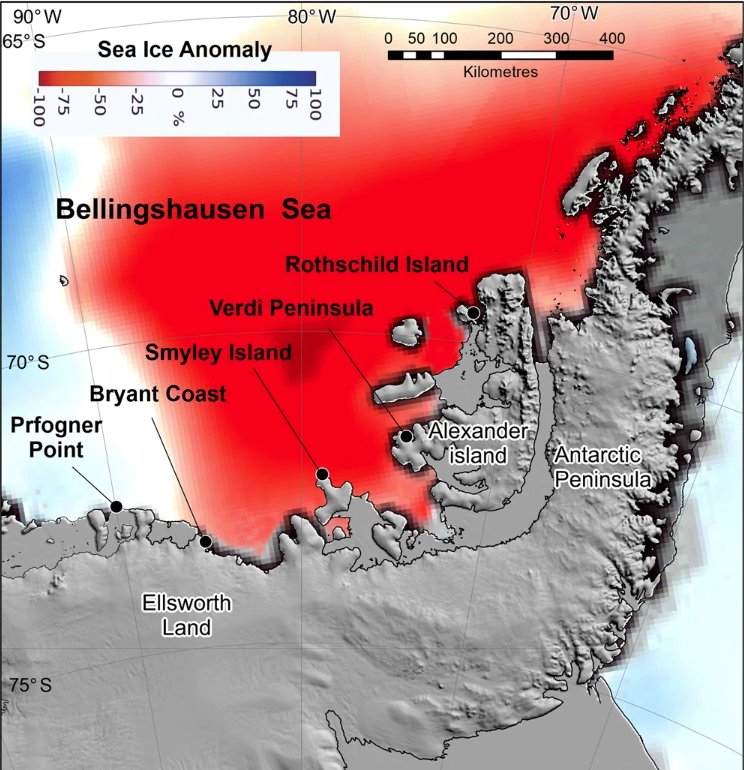
“Last week a paper by Fretwell in the journal Communications Earth & Environment reported that thousands of emperor penguin chicks died last spring in what was termed a catastrophic breeding failure. All chicks were lost from four out of five breeding sites on the Bellingshausen Sea.
“Also last week the Andrews Labor government announced an agreement with AGL Energy to keep the Loy Yang A coal-fired power station open until 2035. But what has that got to do with penguins? The fuzzy down that makes these chicks so cute is not waterproof, and because of climate change all the sea ice melted underneath the chicks, and they fell into the sea and drowned or froze.
“It was not breeding failure that killed these baby penguins, it was our failure. The government’s structured transition agreement with AGL for Loy Yang A apparently includes a risk-sharing mechanism.
“They might not know it, but the penguins are sharing a fair bit of that risk. Victoria can provide certainty for workers and reliable energy by investing in an urgent transition to renewable energy. We just need the political will to put people, planet and penguins over profits.”
Speech by Tim Read MP
The Guardian described the Emperor penguin chick catastrophe as:
“Emperor penguins: thousands of chicks in Antarctica die due to record-low sea ice levels. Breeding failures in the Bellingshausen Sea ‘without precedent’ as multiple colonies across large region all fail in a single season”
The Guardian, 25 August 2023
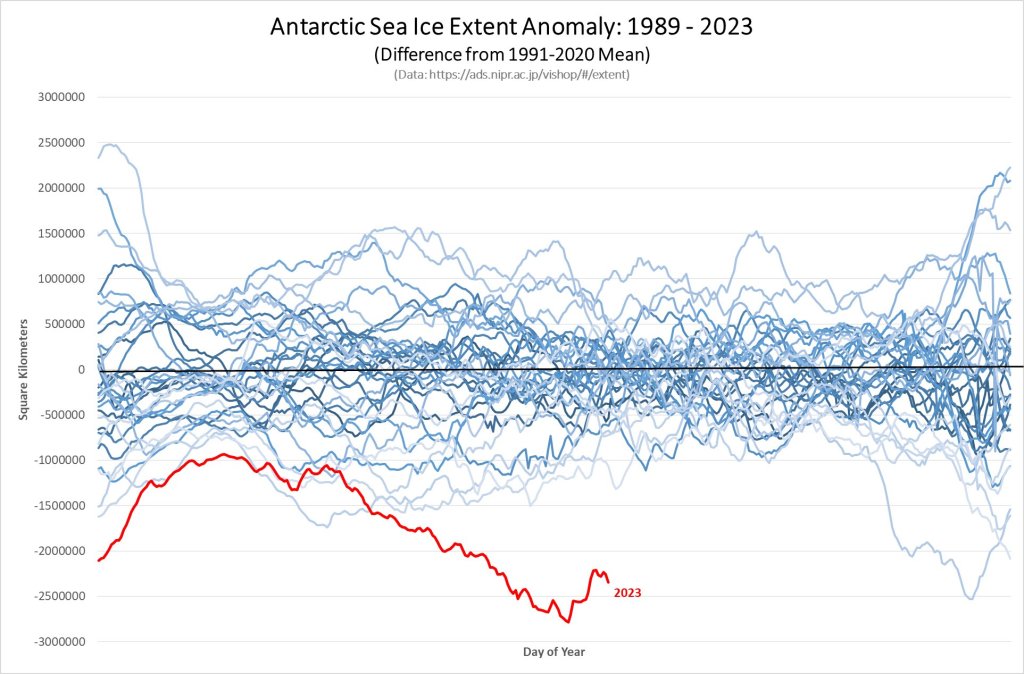
This winter the level of Antarctic sea ice formation has suffered a 7 sigma negative deviation from trend which has scientists very worried.
AGL Energy and State Government agreement on Loy Yang A 2035 closure
The Government in an announcement on 21 August committed with AGL Energy to keep the polluting coal fired power station Loy Yang A open at least until 2035.
AGL has also agreed to provide a $50 million Community and Economic Development Fund – on top of AGL’s rehabilitation obligations – to help repurpose the Loy Yang A site and provide broader community benefits. Part of this agreement is a worker transition package that is over and above existing obligations. The Government is also investing an initial $1 billion towards delivering 4.5 gigawatts of power through new build renewable energy projects as part of the State Electricity Commission (SEC) – the equivalent replacement capacity of Loy Yang A.
While the agreement sets an end date for Loy Yang A, the agreement “allows for scenarios” for an earlier closure “with agreement from the state, including if the power station is not needed for the reliable and secure supply of electricity in Victoria”, AGL said according to a Guardian report..
The Greens would like to see an end to coal power in Victoria by 2030.
On September 1st Climate Change and Energy Minister Lily d’Ambrosio also announced new grid battery storage for Victoria and South Australia:
Our agreement with the Commonwealth will turbocharge the development of new renewable capacity and storage – keeping the lights on, slashing bills and emissions, and helping us achieve our renewable energy and energy storage targets.
Lily D’Ambrosio/Twitter
We reported on 28 August on Victoria’s Hydrogen Energy Supply Chain project for Coal to Hydrogen for export to Japan. This blue hydrogen project is reliant on the CarbonNet project of carbon capture and storage, which is widely recognised as a failed technology at scale carrying enormous risks.
So what did the penguin study by Fretwell et al – Antarctic sea ice led to catastrophic breeding failure of emperor penguins – say? here is the abstract:
“The spring season of 2022 saw record low sea ice extent in Antarctica that persisted throughout the year. At the beginning of December, the Antarctic sea ice extent was tracking with the all-time low set in 2021. The greatest regional negative anomaly of this low extent was in the central and eastern Bellingshausen Sea region, west of the Antarctic Peninsula where, during November, some regions experienced a 100% loss in sea ice concentration. We provide evidence of a regional breeding failure of emperor penguin colonies due to sea ice loss using Sentinel2 satellite imagery. Of the five breeding sites in the region all but one experienced total breeding failure after sea ice break-up before the start of the fledging period of the 2022 breeding season. This is the first recorded incident of a widespread breeding failure of emperor penguins that is clearly linked with large-scale contractions in sea ice extent.”
Fretwell et al (2023)
References
Premier of Victoria media release, 21 August 2023, Agreement Secures Transition For Loy Yang A, https://www.premier.vic.gov.au/agreement-secures-transition-loy-yang
Graham Readfearn, The Guardian, 25 August 2023, Emperor penguins: thousands of chicks in Antarctica die due to record-low sea ice levels, https://www.theguardian.com/world/2023/aug/25/emperor-penguins-thousands-of-chicks-in-antarctica-likely-died-due-to-record-low-sea-ice-levels
Fretwell, P.T., Boutet, A. & Ratcliffe, N. Record low 2022 Antarctic sea ice led to catastrophic breeding failure of emperor penguins. Commun Earth Environ 4, 273 (2023). https://doi.org/10.1038/s43247-023-00927-x
 Climate Action Merribek