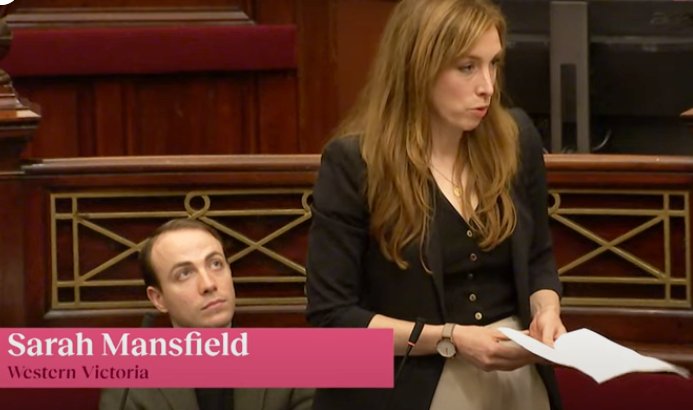
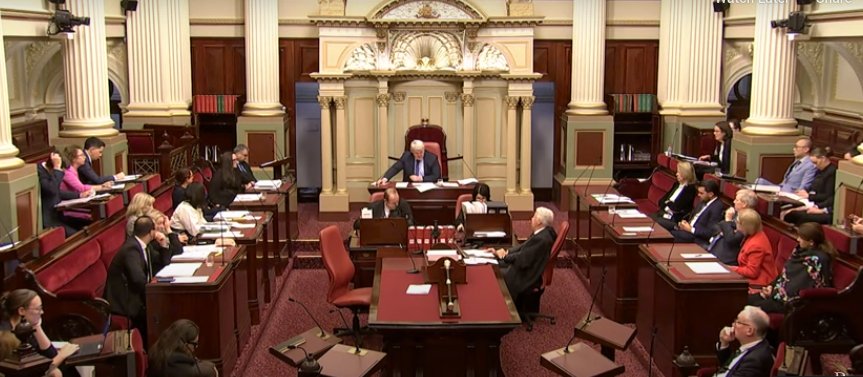
Victoria’s legislative Council passed a motion on 4th October for an inquiry on the impacts of climate change on the built environment in Victoria and how to prepare and best mitigate against those impacts. The motion was proposed by Greens MP Dr Sarah Mansfield and was supported by Greens, Labor, Animal Justice and Legalise Cannabis members of the Legislative Council (MLCs).
Our representatives for Northern Metro, Labor’s Sheena Watt (Parliamentary Secretary for Climate Action) and the Greens Leader Dr Samantha Ratnam, both spoke in favour of the inquiry during the debate. Northern Metro Liberal MP Evan Mulholland did not speak and voted against the inquiry along with other members of the Liberal and National Parties and other minor parties.
We’ll have to wait till 30th June 2025 for the report. The government of the day will then have 6 months to formulate a response. There is sadly no penalty set for a government that does not respond.
The following reference to the Environment and Planning Committee was made:
Sarah MANSFIELD (Greens MLC for Western Victoria) (14:02): I move, by leave, motion 187 in an amended form: That this house:
(1) notes that:
(a) the impacts of climate change are intensifying;
(b) the impacts on Victoria include an increase in frequency and severity of extreme weather and climate-related disaster events which will present significant challenges for Victoria’s built
environment, including private buildings as well as public infrastructure;
(2) requires the Environment and Planning Committee to inquire into, consider and report, by 30 June 2025, on:
(a) the main risks facing Victoria’s built environment and infrastructure from climate change and the impact these will have on the people of Victoria;
(b) how the Victorian government is preparing for and mitigating the impacts of climate change on our built environment and infrastructure;
(c) the barriers facing Victoria in upgrading infrastructure to become more resilient to the impacts of climate change, including barriers in rebuilding or retrofitting infrastructure, including but not limited to issues relating to insurance and barriers faced by local government;
(d) the adequacy of the current Victorian planning system as it relates to its adaptation to, preparation for and mitigation of climate change impacts;
(e) what more could be done to better prepare Victoria’s built environment and infrastructure, and therefore the community, for future climate disaster events; and
(f) whether further inquiries or investigation may be needed into other aspects of climate change adaptation and climate disaster preparedness in Victoria, noting that climate change will have farreaching impacts on all aspects of Victorian life, including but not limited to biodiversity, human health, primary production, industry, emergency services and more, and that while these areas may overlap with the matters covered in this inquiry, they may also warrant further investigation in their own inquiries.
Council divided on motion:
Ayes (19): Ryan Batchelor (Labor), John Berger (Labor), Lizzie Blandthorn (Labor), Katherine Copsey (Greens), Jacinta Ermacora (Labor), Michael Galea (Labor), Shaun Leane (Labor), David Limbrick (Liberal Democrats), Sarah Mansfield (Greens), Tom McIntosh (Labor), Rachel Payne (Legalise Cannabis), Aiv Puglielli (Greens), Georgie Purcell (Animal Justice), Samantha Ratnam (Greens), Harriet Shing (Labor), Ingrid Stitt (Labor), Jaclyn Symes (Labor), Lee Tarlamis (Labor), Gayle Tierney (Labor)
Noes (14): Matthew Bach (Liberal), Jeff Bourman (SFF), Gaelle Broad (Nationals), Georgie Crozier (Liberal), David Davis (Liberal), Moira Deeming (Independent Liberal), Renee Heath (Liberal), Ann-Marie Hermans (Liberal), Wendy Lovell (Liberal), Trung Luu (Liberal), Bev McArthur (Liberal), Joe McCracken (Liberal), Evan Mulholland (Liberal), Rikkie-Lee Tyrrell (One Nation)
Motion agreed to.
Note the Liberals, Nationals, Shooters Fishers and Farmers, One Nation all voted against, while Labor, Greens, Animal Justice, Legalise Cannabis, and even the Liberal Demcrats voted for the Inquiry.
How our Northern Metropolitan Region members of the Legislative Council voted: Sheena Watt and Samantha Ratnam both spoke in Favour, although Ms Watt appears to have missed the vote. Enver Erdogan (Labor) and Adem Somyurek (Democratic Labour) were not present for the vote. Evan Mulholland (Liberal) voted against.
The Speakers on the motion
Greens MP for Western Victoria, Dr Sarah Mansfield in her speech highlighted the global crisis unfolding and existing actions of the government and why this inquiry into climate resilience is essential:
“Last year we saw the official start of seven adaptation action plans, or AAPs, for climate resilience. AAPs focus on the built environment, education and training, health and human services, natural environment, primary production, transport and the water cycle. These plans have been designed to run across five-yearly schedules, so 2022 to 2026 to begin with, and identify existing and key priority plans. AAPs are also complemented by regional climate change adaptation strategies for Victoria’s six regions, which crucially have been developed with communities in those six regions.
Despite what are genuinely solid plans and strategies, in the hottest year on record there are legitimate questions about which climate resilience policies have actually been acted upon by both this government and previous governments and how effectively. Namely, while the built environment adaptation action plan prioritises updating building standards to better account for climate emergencies, Victoria has never had a climate trigger in its planning laws. Historically, Victoria’s lack of any requirement to consider climate impacts when making planning decisions means we have seen too many developments that are either not fit for purpose in a hotter world, built in areas that are prone to impacts of weather events or actually making the climate crisis worse. This is how we ended up with a racecourse on flood plain protected by a flood wall which protected the racecourse but directed floodwaters straight into people’s homes and businesses. People needed to be rescued in rubber dinghies while the racetrack stayed pristine and green.”
A little later Mansfield highlights the need to address urban heat, which is a major concern in a municipality such as Merri-bek:
“It is not just the fires and floods we need to prepare for; it is prolonged periods of heat that can be mitigated through measures to prevent urban heat islands by creating tree canopies and making sure our transport infrastructure is heat resilient. The adaptation action plans acknowledge solutions like these, but to what extent are they being acted upon? Is the government quietly implementing the whole-of-society adaptation this climate requires, or is it just planting a few dozen trees in the CBD? We know this government is making progress, but we can and must do more to ensure Victorians are protected from the devastating impacts of climate change.”
Labor MP for Eastern Victoria Tom McIntosh endorsed the motion and speech by Dr Mansfield, including highlighting the two bushfires and the flood event in the last week in Gippsland and Eastern Victoria :
“It is absolutely critical no matter what way you look at it that we not only here in Victoria but nationally in Australia and globally act on climate change, whether it be for the purpose of our species that inhabit this planet – animals and plants; whether you look at the extreme weather impacts on our most vulnerable people, whether that be in cities or regions; or whether you are looking at food security, what this means for farmers and in turn what it means for people who consume the goods those farmers put out. When we look historically at issues that have impacted politics, nations, geopolitics and war, a lot of the drivers are famine, drought causing famine and all these sorts of things. We need to be very, very clear at the very top why it is so crucially important that all of us are on the same page about acting on this issue.”
Liberal MP for Southern metropolitan David Davis spoke to the motion and in his initial comments it appeared he might support the inquiry, but he soon launched into a lengthy speech on the costs of climate adaptation, particularly in the construction industry. He and his Liberal Party colleagues made even a reference to an Inquiry on Climate Impacts a partisan political issue and voted against the inquiry.
The adaptation action plans are proceeding in a number of key sectors; the regional plans are also proceeding in a number of sectors. This inquiry would deliver some value; there is no question about that. The question is whether this is the most important inquiry at the moment. There is no question that it does cover some important areas. I do agree that matters around tree canopies and energy efficiency and some of the points of intersection with the Planning and Environment Act 1987 are worthy of consideration. The cost of adaptation is also an important issue. Where the coalition is concerned is that this inquiry could see further burdens foisted upon the building sector in particular…
Michael Galea, Labor MP for South-Eastern Metropolitan spoke highlighting the accelerating temperature records from the northern hemisphere and also discussing the threat from bushfires and how climate change is reducing the ability to do controlled burns (to interjections from David Davis and others)
“We have had disturbing reports from here and around the world of record temperatures just this year alone and record heatwaves once again in Europe and North America. As we brace for what is expected to be a very hot season this year, we have to be prepared and we have to be conscious, and I think this referral is a sensible way of making sure that we as a state are as prepared as we can be for the changing climate and what is to come. There are a litany of efforts that have been made, particularly by this government, by the Andrews–Allan government, as well as other governments around Australia, although I do note, as other speakers no doubt will from this side, that this government has been at the forefront of those efforts and, as some interjections recently mentioned in a previous contribution, not just setting ambitious targets but exceeding them. That is a wonderful thing for us to celebrate, but the climate is changing.”
“And if you listen to what I am saying, Mr Davis, we actually cannot do them [Controlled Burns] if the conditions do not allow. It would be reckless to do so, and the conditions are becoming harder and harder and harder each year, which makes it harder to do those controlled burns that are so essential to saving life. You sit in here talking about these targets and saying, ‘Well, you’ve got these targets.’ We also have to live in the real world, and the reason that you do that is because we have to adapt to the situation that we are in. We cannot just say, ‘Oh, let’s go this week, in October, and do some controlled burns,’ because there are bushfires raging in early October. You have to take a commonsense approach to it. … If you are talking about controlled burns, this is exactly part of the reason why this is so critical. It is getting harder and harder to do that work each and every year, harder and harder, which makes it more difficult for us to protect ourselves and our communities.”
Samantha Ratnam, Greens MP for Northern Metro reiterated the global climate impacts being seen in the northern hemisphere and also detailed how this inquiry would complement the existing inquiry into the major flooding event that occurred in Victoria in 2022.
“I think it is worth the chamber noting that we are hearing extraordinary evidence about how communities felt ill equipped, not just in infrastructure and systems but also mentally, for the impact of these climate change disasters. We have been travelling through northern Victoria, and I can tell you one consistent theme that is emerging is that people understand that climate change is here. They get it, and they are very, very scared. They are looking to the decision-makers to support them and protect them, and this is what this inquiry is intended to do: to think about how we better protect our communities from those kinds of events happening in future more frequently. This inquiry reference does not cut across that flooding inquiry that is currently occurring, but what we hope it will do is complement the findings that will come out of that inquiry to think specifically about the built environment, because we are certainly hearing a lot of evidence about significant gaps in that space.”
We agree with Samantha Ratnam in her statement..”I have to say it is hard to understand how the opposition would oppose an inquiry of this nature – forward looking, intent on protecting our communities from the worst impacts of climate change going into the future. How could you not support something that is about protecting our future communities from the disasters that are coming our way?” Until the Liberal Party stops its ouright or defacto climate denial, it needs to be rejected at the ballot box.
Ryan BATCHELOR, Labor MP for Southern Metropolitan also covered similar ground to previous speakers and added a focus on the importance of upgrading social housing for climate adaptation:
“One of the things that this committee referral motion seeks to get into is to look at some of the barriers that Victoria currently faces in upgrading our infrastructure to become more resilient to the impacts of climate change. And it strikes me that one of the things that we as members of Parliament who aspire to create better communities need to think about is how those on the lowest incomes are able to adapt to the changing climate; how their circumstances can be affected by a changing climate, by extreme heat and extreme cold; and what we as policymakers and as members of Parliament can do to try and help them.
One of the issues that we face is that much of the housing stock that the lowest income members of our community, the most disadvantaged members of our community, are living in is decades old and no longer fit for purpose in many respects but especially in the context of being appropriate, energy efficient, well insulated and in places that we can expect those on the lowest of incomes to live in a rapidly changing climate. That is why the government’s program of renewing our social housing is such an important part of addressing the inequalities that climate change brings to our community through our program of demolishing and rebuilding social housing, currently with walk-up social housing, in many of the communities across Melbourne but particularly in the Southern Metropolitan Region and soon, as the recent housing statement says, expanding that program to include some of the larger public housing towers that we have in our community, buildings that are in no way fit to deal with the changes in our environment and changes in our climate.”
Labor MP Ingrid STITT (Western Metropolitan) , as a former Environment Minister, outlined some of the present governments targets and climate adaptation commitments, and she thanked the Greens for bringing the motion forward:
“Responding to emergencies is one thing; preparing for and avoiding those emergencies is also very important work. The government understands this, and that is why we are taking such strong action as a government on climate change, both to cut emissions and to increase our climate resilience. Our targets to reduce emissions by up to 80 per cent by 2035 and to net zero by 2045 align Victoria with the Paris goals of limiting global warming to 1.5 degrees Celsius. We know that there is absolutely no time to waste in that regard, so we have been continuing to drive those targets in a whole-ofgovernment way – not just looking at the important portfolio of climate change but looking at where we can drive those emissions reductions right across all of the government’s work.”
Sheena Watt, Labor MP for Northern metropolitan and the new Parliamentary Secretary for Climate Action spoke to the Government’s climate targets and stated “We stand on the side of the planet, with our history of delivering real action.” She spoke on the importance of planning reform incorporating climate resilience and mitigation:
“I want to take this opportunity to speak about planning, because for a bright climate future we need to have reformed the planning processes that continually improve how we plan for and adapt to climate-related hazards. That is captured in the Victorian planning policy framework, which contains policy to plan for environmental risks by considering climate change impacts – bushfires, flood plains, soil degradation and more. You see, Victoria’s existing metropolitan strategy, Plan Melbourne 2017–2050, recognises the importance of improving the resilience of the built environment to create more sustainable and livable cities.
The Minister for Planning, Sonya Kilkenny in the other place, recently announced an update to Plan Melbourne. In this new plan we will be planning for all Victorians and we will set into action what our state might look like in the coming decades. It will focus on delivering more homes near transport, job opportunities and the essential services that are so needed for a vibrant, livable and sustainable neighbourhood. This will include a renewed focus on climate change and resilience. We cannot do this alone, so industry engagement will begin on that work in 2024. Alongside this work, the non-stop Minister for Planning will also continue to implement an ambitious planning reform agenda. Action across the building and planning systems is underway to support adaptation to climate change and reduce Victoria’s greenhouse gas emissions.
Sonja TERPSTRA, Labor MP for North-Eastern Metropolitan, reiterated the Government’s most recent actions building climate resilience and managing risk in the built environment:
“In the 2023–24 state budget we made significant investments in climate resilience and emergency management, including $10 million over three years for protecting waterways, including the rehabilitation and revegetation of those waterways so wildlife can thrive. We know that making sure that our waterways can be revegetated has knock-on effects for climate change and resilience, so we have invested $10 million over three years for that. There is almost $13.8 million for VicCoasts to build a safe, healthier and more resilient marine and coastal environment for the community by addressing critical erosion and flood risks, protecting marine and coastal assets and supporting the adaptation and resilience of coastal communities. It is not necessarily a built environment, but our marine and coastal environments are very important parts of our environment, and we are making sure that they are protected from risks. There is $677 million to meet the emergency response and recovery needs of flood-affected communities, and $40 million over four years to bolster the forest firefighting workforce and maintain strategic fuel breaks so that we can better prepare for and respond to fire emergencies…. There is $34 million for upgrades to emergency services facilities, including CFA stations and VICSES facilities, making sure that our emergency responders and first responders have the modern, fit-for-purpose facilities that they need to enable them to do the work that they need to do in responding to natural disasters brought about as a consequence of climate change.”
David ETTERSHANK, the Legalise Cannibis MP for Western Metropolitan highlighted the need for action and also pointed out that the construction industry is a major source of emissions and that revolutionary thinking and solutions are needed, including the consideration of the use of Hempcrete in construction.
Reference:
Read the full speeches (proof version) at Victorian Hansard, Legislative Council, 4 October 2023, https://www.parliament.vic.gov.au/images/stories/daily-hansard/Council_2023/Legislative_Council_2023-10-04.pdf
 Climate Action Merribek