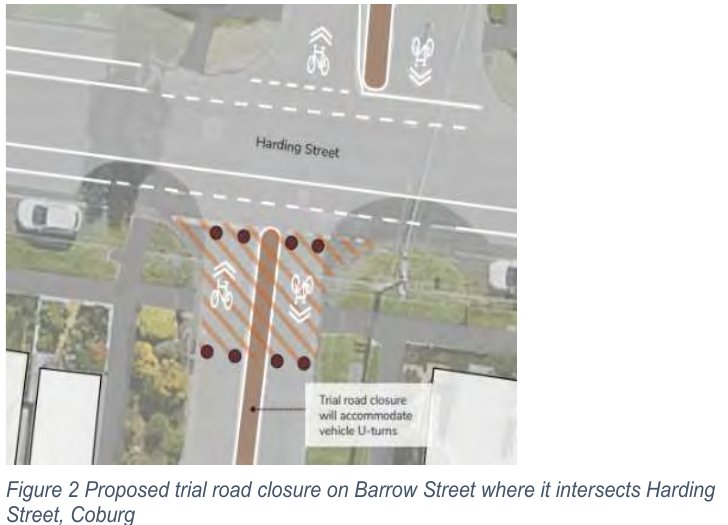
Update: Merri-bek Council approved the road closure modal filter 12 month trial by 6 votes to 3.
Merri-bek Council is considering a modal filter road closure trial for Barrow street, Coburg, at the south side of the intersection of Harding street to improve the safety of using Barrow street for cycling and active transport.
Barrow street and Harding street are both on the Principal Cycling network. Barrow street is a minor road under Council control. There is already a permeable modal filter road closure on Barrow street located on the south side of Moreland Road, established decades ago.
The Council Officers have done consultation and engagement with local residents.
Council Officers highlighted that
- Barrow street is a key route for local school students from St Bernard’s Primary School, Coburg High and Primary Schools, Antonine College and Merri-bek Primary School.
- Average weekday vehicle volumes is 1,243. This is considered too high for a strategic cycling corridor that is widely used by school children.
- Council officers are also aware of community concerns that Barrow Street is used as a rat
run which has contributed to some people feeling unsafe to walk and ride in the area.
Here is the motion from the Council Agenda:
7.1 BARROW STREET TRIAL ROAD CLOSURE AT HARDING STREET, COBURG
Acting Director City Infrastructure, Indivar Dhakal, Transport
Officer Recommendation
That Council:
1. Considering the report from the Department of Transport and Planning and the written and verbal submissions from the public submitted under Section 223 of the Local Government Act 1989 (the Act), resolves under Clause 10, Schedule 11 of the Act to block the passage or access of vehicles, other than bicycles and pedestrians, by installing temporary barriers (bollards) to trial a road closure on Barrow Street, Coburg, from the intersection of Harding Street to a point up to 8 metres further south. The trial shall be in place for approximately 12 months starting in December 2024.
2. Following the trial, receives a report from Council officers in early 2026 with a recommendation on whether to proceed with consulting with the community on a permanent road closure under Section 223 of the Act.
3. Schedules installation of trial infrastructure to occur during the 2024/25 Summer School Holidays to allow for local schools and the community to prepare for the closure ahead of the 2025 school year.
The Council Report highlights that the Barrow Street road closure trial is part of the Moving Around Merri-bek Strategy adopted at the March 2024 Council Meeting.
“This Strategy seeks to ensure all actions impacting the councils transport network contribute to objectives aligned to the values of Safe, Accessible, Sustainable, Healthy, Liveable, and Inclusive. One of the key tools available for council is restricting vehicle movement on local roads to improve safety, liveability, health and accessibility on local roads. The proposed trial road closure contribute to achieving the following specific objectives of the draft Moving Around Merri-bek Strategy (2023).
1. Create streets where everyone feels safe.
2. Reduce the frequency and severity of crashes on our roads.
3. Create a transport system in Merri-bek that allows everyone to meet their daily needs and to fully participate in our community.
4. Reduce air and noise pollution generated from vehicles.
5. Create streets and public spaces that encourage physical activity and socialisation amongst local communities.
6. Improve access to shops, services and employment for our local community.
7. Work collaboratively with our community and stakeholders to improve our transport system.
8. Work to make our streets and public spaces are safe for all people and inclusive of all genders, backgrounds, and abilities.”
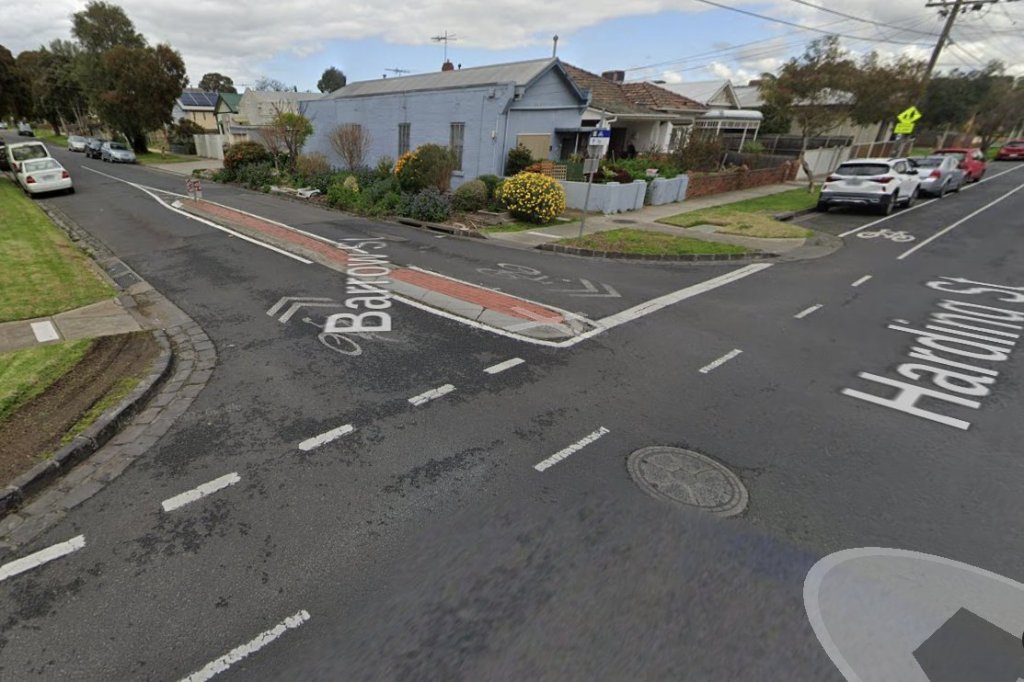
Concerns raised by St Bernard’s Primary School
The Principal of St Bernard’s Primary school had circulated a petition opposing the road closure of Barrow street at the very start of the consultation. Note that the front of the school and main access is on Patterson street, not Barrow St.
St Bernard’s Catholic Primary School raised many concerns but did not highlight the positives that this may allow more of their students to use active transport to get to school. Their apparent lack of concern about the safety of students, both attending their school and other schools in the area, is concerning.
Coburg High School also identified this as a route that many of their students currently use, so a modal filter would increase safety of thiese students and may encourage more students to cycle or use scooters.
Council Officers detailed very closely in their report that they took the concerns of the St Bernard’s school community very seriously.
In the Council Officer report “Council officers have made good faith attempts to better understand the concerns of the school which are detailed in this report. This included correspondence with the school in writing, by phone and through in person meetings since the consultation period commenced, which have provided valuable insight into the operations of the school and their concerns with the trial.”
Council Officers proposed detailed solutions for access by waste contractors and buses to the particular concerns raised by the school. They also addressed concerns about emergency vehicle access.
Pascoe Vale MP attacks Council over Barrow St consultation
In a broad political tirade against Merri-bek Council in an adjournment debate on 20 June 2024, the Labor MP for Pascoe Vale Anthony Cianflone incorrectly accused Council of not consulting with St Bernard’s School on the trial road closure. “They did not consult with the St Bernard’s parish and school community on the Barrow Street road closure proposal.” he said.
it is reported he has written to Council against the proposal.
Mr Cianflone, as a candidate that signed a Climate Emergency declaration, should look to supporting prioritising more active transport at the state level to improve safety and cut transport emissions, rather than criticising Council’s careful efforts. He could start by getting VicRoads and Department of Transport to address the major safety issues on Murray Road in Coburg as a priority.
Changing our mobility is essential for climate action
The Barrow Street modal filter road closure trial is part of enhancing the safety of cycling in Merribek. This encourages changes in behaviour for more people to take up active transport. This is necessary to reduce transport emissions and also improve personal health through exercise. Imporrtantly Barrow street is a local street used by many local Primary and High school students, that could be made even safer.
Local resident Helen Kratzmann has highlighted in a Facebook Post some of the recent traffic incidents and urged people to contact Councillors to support the Council Officer recommended motion.:
- Last week, a motorist crashed through a fence of a property on Barrow Street near the green park.
- Last year a motorist crashed into a property on Barrow and Moore Street.
- Two years ago, a motorist crashed into a property on Blair and Barrow Street.
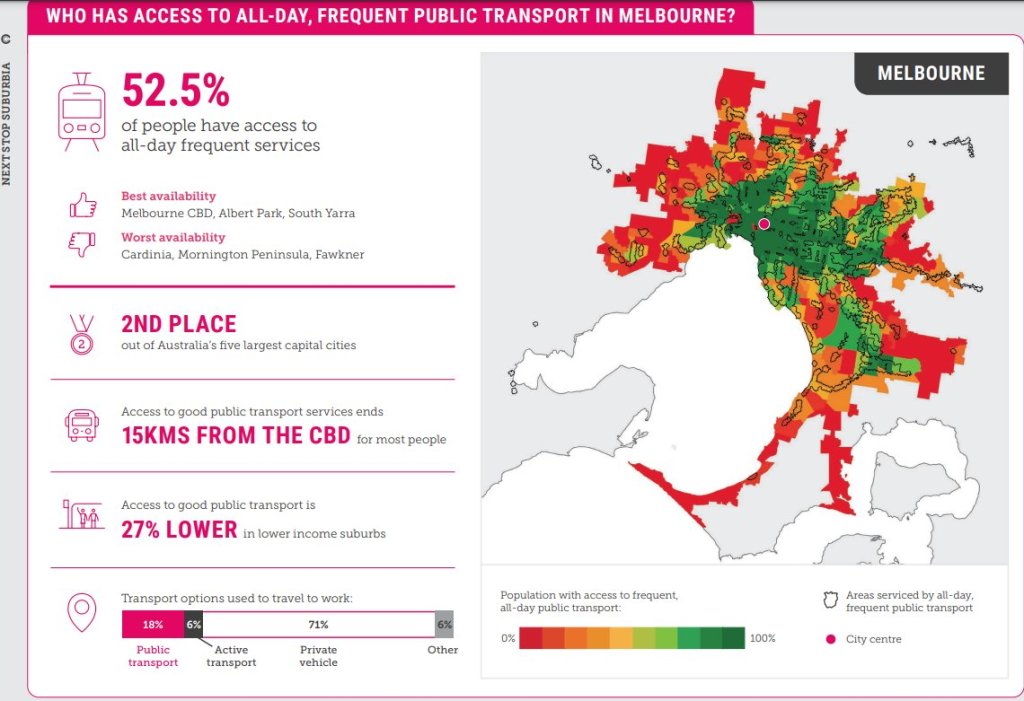
The Climate Council has just released a new report – Next Stop Suburbia: Making Shared Transport Work for Everyone in Aussie Cities’ . Key Finding 3 relates to the Barrow Street modal filter road closure. It articulates that With the right infrastructure and services in place, we can make shared and active transport more attractive for more Australians, cut climate pollution further and faster this decade, and create safer, cleaner streets.
Enabling more people to use shared and active transport not only cuts climate pollution more quickly than switching every petrol car to an electric one, but it also reduces congestion, makes our streets safer and provides more affordable transport options for all.
Here is the summary of all the key findings from this report:
1. Our car-centric transport system is polluting our cities and our climate. It has left many of us in the lurch when it comes to alternatives, with only half of the 15 million Australians living in our five biggest cities having access to frequent, all-day public transport.
- For decades, governments have prioritised the use of private cars in transport planning and investment leaving too many people with no other way to get around. This is making our streets more congested, dangerous and unhealthy.
- Transport is Australia’s biggest contributor to climate pollution after energy, making it an important focus of our efforts to slash climate pollution this decade. At the moment, Australia has more registered cars than drivers, and relatively limited use of shared and active transport.
- Using shared and active transport for more trips more often, simply isn’t possible for many people because they don’t have access to transport options that meet their needs.
- Given the significant costs involved with car ownership, a lack of effective shared transport can pose an additional barrier to communities who may already struggle to access employment, education and other needs.
2. Too many people living in Australia’s largest capital cities lack access to convenient, frequent and reliable public transport, so they are stuck relying on expensive and polluting private cars.
- Climate Council analysed public transport access in the five capital cities where most Australians live. Between a third and up to two thirds of people living in each city don’t have access to all- day, frequent services.
- Brisbane has the worst public transport access, with 66.4 percent of its residents missing out on all-day, frequent services, followed by Perth (59.5 percent), Adelaide (52.4 percent), Melbourne (47.5 percent) and Sydney (32.8 percent).
- In most cities, the difference in public transport access is significantly worse when comparing poorer and wealthier areas, with access levels in poorer areas 27 percent lower in both Brisbane and Melbourne, 19 percent lower in Adelaide, and 18 percent lower in Perth.
- People living in high-growth areas in middle and outer suburbs are significantly underserved by public transport. The cost-of-living benefits of affordable transport would often make the biggest difference in these areas.
- Analysis shows public transport frequency in our biggest cities plummets outside of morning and afternoon peak commuting hours, making travel slow and complicated for the many Australians who need to get around outside of these times.
- Investment in public transport has not kept pace with growing demand. Most people who live more than 10km away from the centres of our largest cities generally lack convenient, frequent and reliable access to public transport services.
- Transport options need to connect people across suburbs, not just to the city.
3. With the right infrastructure and services in place, we can make shared and active transport more attractive for more Australians, cut climate pollution further and faster this decade, and create safer, cleaner streets.
- Climate Council’s research shows there are readily-available solutions that can more than halve climate pollution from transport by 2030.
- Enabling more people to use shared and active transport not only cuts climate pollution more quickly than switching every petrol car to an electric one, but it also reduces congestion, makes our streets safer and provides more affordable transport options for all.
4. Governments at all levels should plan and invest in infrastructure and services that enable more Australians to choose cleaner, cheaper transport options more often.
- Embed the increased uptake of shared and active transport in decarbonisation planning: All levels of government should make increasing shared and active transport uptake a core objective of transport sector plans to cut climate pollution – for both passenger and freight transport, backed by a big step up in funding.
- Deliver a Shared Transport Service Standard: State and territory governments should work towards providing convenient, frequent and reliable public transport services operating at least every 15 minutes from 7am to 7pm within 800 metres of every home in Australia’s eight capital cities.
- Make our cities better connected, compact and efficient: State and territory governments should set the objective of delivering at least 70 percent of new housing and commercial building developments within the established suburbs of major capital cities, by making sustainable use of brownfields sites and managing increases to density in existing suburban areas.
- Make streets friendly for people, not cars: Local governments should ensure pedestrians feel safe on Australian streets, protected from cars, and have public spaces where they can move freely. Delivering precincts where pedestrians and bikes have permanent right of way, reducing speed limits to 30km/hour, and where private car use and parking is not supported – except for those with accessibility needs – will help enable safe streets for all.
- Give shared and active transport priority on roads: State and territory governments should give shared and active transport priority on the major roads needed to travel to and from frequently-visited commercial, service and employment centres, and between suburbs.
- Create Shared Transport Zones: State and territory and local governments should create designated areas in our capital cities where only shared transport options are allowed to travel through. This will encourage people to use shared and active transport when visiting these areas.
Use of Permeable Modal Filters to enhance active transport
The road closure trial would put in place a similar arrangement to the permeable modal filters successfully operating on the Canning Street bike route into the city in Carlton North that limits motor vehicle traffic to local use while enhancing safe cycling use. A nearer example to hand is the modal filter road closure on Barrow Street at Moreland Road that has been working successfully for many years.
Survey of Local Residents about the Barrow Street/Moreland Road, Brunswick, Road Closure
On Thursday, 4th July 2024 and Monday, 8th July 2024, a survey was carried out, questioning local residents about the road closure at Barrow Street and Moreland Road.
This road closure has been in place since the late 1980s. Local residents say it was implemented as a result of a number of fatalities at the intersection. Two 35-40 year old gum trees feature in the current road closure.
The survey was carried out under the auspices of “Walk On Merri-bek”, a local pedestrian advocacy group.
Residences were sequentially door-knocked on Barrow, Davies, Donald and Mitchell Streets. One question was asked after introduction, which included reference to the long-standing road closure. The question was:
“How do you feel about the road closure at Barrow St and Moreland Rd?”
The response was then recorded. The answers were non-identified, that is, the person who responded in the recording of the comments was not identified, and their comments were not identified to an address. The addresses that provided a response were recorded separately, to allow for addresses that did not respond to the door-knock to be attempted again if time had permitted.
Approximately 85 residences were door-knocked, with some 34 responses occurring, see table 1 below:
| Positive | 31 |
| Ambivalent | 1 |
| Negative | 1 |
| Total | 33 |
Support for the road closure was very high.
Comments about the road closure are listed in Appendix 1.
Appendix 1. Comments about the Barrow/Moreland Road Closure
| No problem, safer, no traffic, I like it |
| Good, used to be a black spot |
| Not bad |
| Probably positive to a degree, it does stop cars accelerating across the road, diverts fast traffic, good for kids and runners and pedestrians |
| Doesn’t worry me, near the tram stop which is easy to get to |
| As a safety thing, it is good |
| Probably good, stops people like me rat-running, this street is quieter |
| I use Barrow for cycling, less cars particularly because of Moreland Road |
| Easy access for pedestrians and bikes, really like it, spent a lot of time with my parents playing ball sports there, no fast busy traffic, use it everyday to go to school |
| Nuisance, could be lights, but probably accident prone, used to it, directs people to De Carle Street, put in to stop flow and this works, I want it to stay, Pooley Reserve is commonly used by kids and dog walkers, a good thing |
| I don’t like it |
| In a car, you can just go up the next block, safer for pedestrians and cyclists |
| I like it, I’d get a lot more traffic outside my windows, I like looking out onto trees, pro |
| I like it, nice that’s there is not a lot of through traffic |
| Fine, like the closed street, feels safer, like the gum trees |
| I don’t drive, I love it, the area is really quiet and safe, parents use it to walk to school, parcels can be left at my front door because it is an area for parents and children, good for cyclists |
| Not bad, lots of fatalities years ago |
| Works for me, there is less traffic |
| Fine, good, it limits traffic to Barrow Street |
| Good, it stops traffic |
| Works really well |
| I don’t mind |
| Probably good, doesn’t bother me |
| Fantastic, strong yes |
| Easier to get to Moreland Road if open |
| Convenient |
| Don’t commute that way, lots easier as a cyclist, less traffic |
| Fairly indifferent |
| I like it, closes area to non-local traffic, better for kids, cyclists, dog-walkers |
| Good, already too much rat-running |
| Good, not more car traffic |
| Love it, street quieter |
| Fine, stops traffic, safer for kids because they come to the park |
| Like it, quiet for walking and cycling, lots of cyclists down Barrow Street |
Filtered permeability, modal filters and quietways
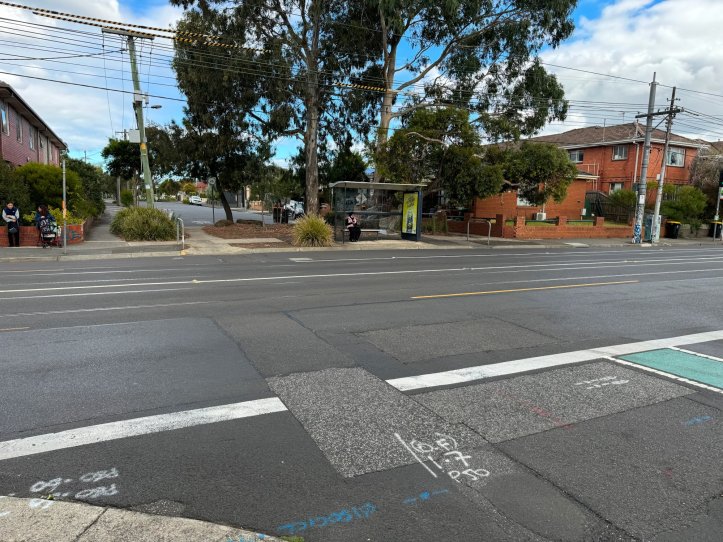
Filtered permeability and quietways refer to a design strategy that limits the through-traff ic of motor vehicles in certain areas, while allowing cyclists and pedestrians to use the same space with relative ease. This is a form of mixed-traffic cycling environment that can provide maximum benefits to all users. This is typically achieved using barriers, bollards or other street furniture to create a network of low-traff ic or traffic-free streets that are more accessible and attractive to cyclists and pedestrians (see Figure 7.5). This approach can help to create a more pleasant and safer environment for active transport users.Ausroads, July 2024, Prioritising Active Transport
One of the issues with Barrow street is its use as a car rat-run for avoiding Nicholson street. Placing a modal filter will greatly reduce traffic using it this way and make Barrow Street safer for cycling. The Austroads research report highlights that “Filtered permeability is among the most effective methods to grow active transport mode share (Kuss and Nicholas 2022). The introduction of filtered permeability and quietways emerged as among the most
consistent themes from the subject matter expert interviews.“
Adding a modal filter for Barrow Street at Harding street will prevent motor vehicle through traffic. This will likely resulting in a 90% reduction in car traffic and an increase in active travel volumes and user satisfaction based on research looking at Modal filters (Aldred and Croft 2019)
The AustRoads research report recommends that bike modal filters should be discussed in greater detail as part of the Austroads Guide to Road Design, and the Guide to Traffic Management.
Further sustainability issues on Council Agenda
The Council agenda for 10 June was reviewed with a climate and sustainability lens:
Reports
7.1 Barrow Street trial road closure at Harding Street, Coburg
Importance: Safety and reduced transport emissions. Barrow street is a north -south cycling route in Coburg, and is used by both Primary school students and high school students to ride to school. This is a simple 12 month trial road closure / permeable modal filter at Harding street. Note. Barrow street already has a road closure for many years on the south side of crossing Moreland Road. State Labor MP Anthony Cianflone has written to Council opposing the Barrow St at Harding st modal filter road closure.
Carried: 6 votes For, 3 votes against
7.2 Upfield Corridor Urban Design Framework (Brunswick LXRP) – Stage 1
Importance: critical for open space, tree planting, reducing urban heat, active transport. Council has consulted the community on what they want to see in the Brunswick part of the Level Crossing removal, that has been pushed out to 2030 by the State Government. This Design Framework is critical for delivering a level crossing removal project that delivers to the local community.
Note: Pascoe Vale Labor MP Anthony Cianflone accused Council of “campaigning against the Level Crossing Removal Project on the Upfield line in Coburg.” in an adjournment Debate speech on 20 June 2024. Yet Merri-bek Council, both in the Coburg Moreland to Bell level crossing removal project, and in the Brunswick level crossing removal proposed project, that the state government has deferred till 2030, chose to actively engage with residents to seek maximum outcome benefits for the community from level crossing removal. The Upfield Corridor Urban Design Framework (Brunswick LXRP) – Stage 1 report highlights Council citizen engagement that the Level Crossing Removal Project tick the box consultation fails to achieve.
Carried…
7.3 Fawkner Merri Creek Parklands Plan
Importance: Biodiversity, open space, recreation, active transport, connection to nature. This final Plan seeks to balance the role of the creek as a primary waterway biodiversity corridor with the need to maintain drainage and key service easement functionality whilst meeting the increasing needs of the local community for open space and recreational access. Fawkner Merri Creek Parklands Plan identifies a total of $1.6105 million in proposed new capital works spending in the Parklands over the next 8 years. These projects will be subject to future Council budget processes and potential grants.
Carried Unanimously
7.4 Bachar Houli Foundation – Islamic College of Sport and Centre of Excellence Proposal
Importance: reactivation of Coburg Bowls club as a Council owned site for multiple sports operated to enhance Muslim sports participation. Council need to keep in mind and apply Sports Grounds Surfaces Policy with re-development of this site.
Carried Unanimously
7.5 Glenroy Community Hub Cafe – Expression of Interest Update. Carried unanimously
7.6 Land adjacent to Brunswick Baths – Options for future use, Carried unanimously
7.7 Adoption of the Economic Development Action Plan 2024-2027. Carried unanimously
7.8 Improving access to Exercise Programs for Older People in Merri-bek. Carried unanimously
7.9 Improving Community Engagement Policy for older, non-English speaking residents. Carried unanimously
7.10 Rear of 1 to 15 Marks Street, 2 to 16 White Street and 21 Audley Street, Coburg – proposed sale of land from a previously discontinued road. Carried.
7.11 Contract Award: RFT-2023-570 – Dunstan Stormwater Harvesting Project
Importance: Important for managing stormwater, mitigating local flooding, irrigation of sportsfields in time of drought. Also contributes to urban cooling.
Carried unanimously
7.12 Contract Award: RFT-2024-574- Supply and Install of Gym Equipment for Council’s Aquatic and Leisure Centres. Carried unanimously
7.13 Friends of Aileu Annual Report 2023
Importance: international solidarity in a sister city relationship with Aileu in Timor Leste.
Carried unanimously
7.14 Financial Management Report for the Period Ended 31 May 2024. Carried unanimously
7.15 Governance Report – July 2024 – Cyclical Report. Carried
Notices of motion
8.1 Family Violence Initiatives
Importance: Tackling gender based violence and equity – addressing family violence in Merri-bek
Deferred to August meeting.
8.2 Recognition of internationally renowned local artist – Destiny Deacon 1956 to 2024
Importance: recognition of an indigenous internationally renowned artist and Merri-bek citizen.
Carried unanimously
8.3 Art and History at the Brunswick Town Hall
Importance: seeking to maximise use of Brunswick Town Hall, including expansion of art exhibition space by Noel Counihan Gallery. There is a place and opportunity to permanently recognise Vic and Vida Little and the Brunswick Progress Association as part of this. During 1973 the Brunswick City Council embarked on a plan to demolish the Town Hall and build a modern five-story building to house all of council services. Vic and Vida Little and the Brunswick Progress Association led a successful public campaign in 1974 against council, stopped the demolition of the town hall. This motion fails to mention this or offer recognition.
Slightly amended to recognise Vic and Vida Little. Carried Unanimously
References
Dr Elliot Fishman, Dr Mahsa Naseri, Dr Liam Davies, Jessie Tran and Takuya Katsu, AustRoads, June 2024, Prioritising Active Transport, AustRoads Research Report AP-R711-24 https://austroads.com.au/__data/assets/pdf_file/0031/653368/AP-R711-24_Prioritising_Active_Transport.pdf See also the Active Travel publications Landing page for this report https://austroads.com.au/publications/active-travel/ap-r711-24
Aldred R and Croft J (2019) ‘Evaluating active travel and health economic impacts of small streetscape schemes: An exploratory study in London’, Journal of Transport & Health, 12:86–96, https://doi.org/10.1016/j.jth.2018.11.009 as referenced in Fishman et al, Prioritising Active Transport (2024)
Kuss P and Nicholas KA (2022) ‘A dozen ef f ective interventions to reduce car use in European cities: Lessons learned from a meta-analysis and transition management’, Case Studies on Transport Policy, 10(3):1494–1513, https://doi.org/10.1016/j.cstp.2022.02.001 as referenced in Fishman et al, Prioritising Active Transport (2024)
The Climate Council, 8 July 2024, ‘Next Stop Suburbia: Making Shared Transport Work for Everyone in Aussie Cities’
Victorian Government Data, Principal Bicycle network https://discover.data.vic.gov.au/dataset/principal-bicycle-network-pbn
Victorian Legislative Assembly Hansard (as Corrected) for 20 June 2024, Adjournment Debate Question by Anthony Cianflone on Merri-bek Council, pages 2484-2485 https://hansard.parliament.vic.gov.au/images/stories/daily-hansard/Assembly_2024/Legislative%20Assembly%202024-06-20.pdf
Helen Kratzmann, Facebook Post, 7 July 2024 https://www.facebook.com/groups/364246377775916/posts/1541395466727662/
Merri-bek Council Agenda, 10 July 2024, https://www.merri-bek.vic.gov.au/globalassets/website-merri-bek/areas/my-council/council-and-committee-meetings/council-and-parm-meetings/agendas/2024-agendas/council-agenda-2024-07-10-july—pdf-with-attachments.pdf
 Climate Action Merribek