The following candidates have nominated. Existing Councillors seeking re-election are marked with an asterisk before their name, ordered alphabetically based on Last name. Political affiliation is in brackets.
- Helen Breier (ALP) Instagram
- Jay Iwasaki (Greens) Instagram
- Owen Miller (Fusion Party) Instagram
- Louisa Bassini (Victorian Socialists)
- Mel Yuan (Independent)
Candidates Forum | Climate Survey | Stop Burning Plastic | Streets People Love | Waterways

Candidates Forum by Brunswick Residents Network
When: THURSDAY 26 SEPTEMBER, in the west:
Bulleke-bek Ward 7.30-8.45PM
Where: At West Brunswick Tennis Club, 425 Victoria Street, Brunswick (behind the courts)
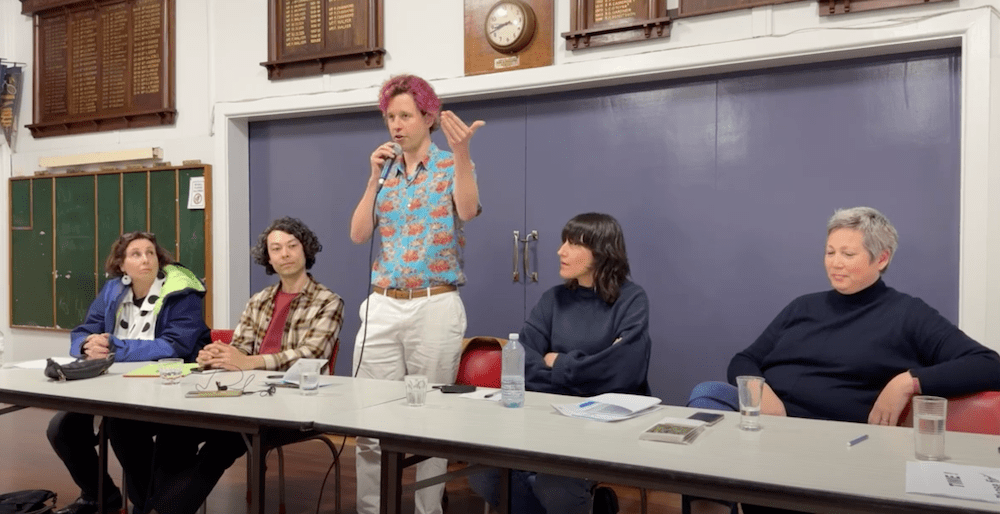
Candidates attending the forum from L to R:
Helen Breier (ALP)
Jay Iwasaki (Greens)
Owen Miller (Fusion Party)
Louisa Bassini (Victorian Socialists)
Mel Yuan (Independent)
Youtube CHAPTER TIMESTAMPS:
2:12: Mel Yuan Opening Statement
5:42: Louisa Bassini Opening Statement
7:56: Owen Miller Opening Statement
10:39: Jay Iwasaki Opening Statement
13:33: Helen Breier Opening Statement
17:10: Question 1. Where does the delegation of planning decisions cross the line?
17:55: Q1 Answer – Mel Yuan
18:57: Q1 Answer – Louisa Bassini
20:17: Q1 Answer – Owen Miller
22:30: Q1 Answer – Jay Iwasaki
24:12: Q1 Answer – Helen Breier
26:36: Question 2. Issues around footpath quality. What do candidates think of plans to make Sydney Rd footpaths completely flat?
27:14: Q2 Answer – Helen Breier
28:07: Q2 Answer – Jay Iwasaki
29:34: Q2 Answer – Owen Miller
30:45: Q2 Answer – Louisa Bassini
32:06: Q2 Answer – Mel Yuan
33:24: Question 3. If elected, will candidates continue to support the Friends of Aileu program?
34:28: Q3 Answer – Mel Yuan
35:40: Q3 Answer – Louisa Bassini
36:43: Q3 Answer – Owen Miller
38:11: Q3 Answer – Jay Iwasaki
38:53: Q3 Answer – Helen Breier
39:03: Question 4. How to protect Brunswick from rat running, and how to bring more transport options to people who live here?
39:54: Q4 Answer – Mel Yuan
40:51: Q4 Answer – Louisa Bassini
41:47: Q4 Answer – Owen Miller
42:45: Q4 Answer – Jay Iwasaki
44:26: Q4 Answer – Helen Breier
45:58: Question 5. Do you have a how to vote card, and if so, who is your second preference?
46:14: Q5 Answer – Mel Yuan
46:29: Q5 Answer – Louisa Bassini
46:44: Q5 Answer – Owen Miller
47:17: Q5 Answer – Jay Iwasaki
48:11: Q5 Answer – Helen Breier
49:26: Question 6. With increasing climate impacts such as increase in flash flooding events, Within your remit as councillors, what measures can you take to transform streets in the future to ensure we’re all safe?
49:47: Q6 Answer – Mel Yuan
50:28: Q6 Answer – Louisa Bassini
51:21: Q6 Answer – Owen Miller
52:57: Q6 Answer – Jay Iwasaki
54:38: Q6 Answer – Helen Breier
56:52: Question 7. What would you do to engage with people and draw them into the process?
57:48: Q7 Answer – Helen Breier
59:49: Q7 Answer – Jay Iwasaki
Facebook Event: https://www.facebook.com/events/377982108686390/377982118686389/
This was a free Forum, and any donations helped support BRN community venues such as this tennis club.
Climate and Sustainability surveys and Pledges
Climate Action Merribek conducted a local tailored survey sent to all 55 candidates in all wards. Vote Climate also issued a survey on the Climate Emergency to all candidates across all Councils in Victoria. Stop Burning Plastic issued a pledge survey to all candidates across all Councils in Victoria. We undertook to compile results for Merri-bek of all 3 surveys. We followed our initial email up with a reminder to complete all 3 surveys.
One key assessment point is whether candidates respond, which provides one indicator how they may engage with constituents. If a candidate doesn’t respond, whether positive or negative, maybe you should not put them high on your preferences.
| Name | Local Climate Survey | Climate Emergency Survey | Stop Burning Plastics Pledge |
| Louisa Bassini (Victorian Socialists) | Full Response | No Response | No response |
| Helen Breier (ALP) | Full Response | Yes | Yes |
| Jay Iwasaki (Greens) | Full Response | Yes | Yes |
| Owen Miller (Fusion Party) | Full Response | Yes | Yes |
| Mel Yuan (Ind) | Full Response | Yes | Yes |
Merri-bek Climate Survey
Q4. Connections to Merri-bek Wards. Outline your connection to Merri-bek, do you live in the ward you are contesting, do you work in that ward? What are your other connections to the Merri-bek community?
Louisa Bassini: I live in the Bulleke-bek ward that I am contesting and have lived in Merri-bek for most of my life. My kids attend Brunswick North Primary School and my extended family live in the area also.
Helen Breier: Live in ward for 35 years, been on kinder, school and sport committees in the area. have taught at Glenroy secondary school. Contested at last election
Jay Iwasaki: I live in an apartment in Bulleke-bek ward, the ward I am running to represent, and commute most regularly to the city, Friends of the Earth in Collingwood where I’m on the board, or the University of Melbourne by tram, train, and cycle paths. I shop locally, and try to get my groceries from local grocers and businesses as much as possible. I am involved with the arts community, and go to gallery openings regularly across Brunswick. I use cycle and walking infrastructure to get around to cafes and restaurants with my partner and our friends. Most of my weekly life involves spending time in inner-north suburbs like Brunswick, Coburg, Northcote, and Fitzroy – all suburbs with similar issues and a high degree of connectivity.
Mel Yuan: I have lived in Brunswick since 2002 and am standing in the ward I live in.
Owen Miller: I moved to Brunswick East in 2022 after living in the US for 7 years. It was great to return to a place with convenient bike lanes, beautiful nature, vibrant street art and an active night life. I now live in an apartment in Brunswick and I work from home in the tech industry. I’m a regular at the music and comedy clubs around here and I’ve even performed stand-up myself a few times.
Q5. Climate Emergency. Merri-bek Council declared a Climate Emergency in September 2018. Do you accept the research evidence from climate scientists and the UN Secretary General that:
(a) the earth is already too hot and we are outside the safe climate zone?
(b) we face a climate emergency?
(c) local cooling is required to prevent runaway warming?
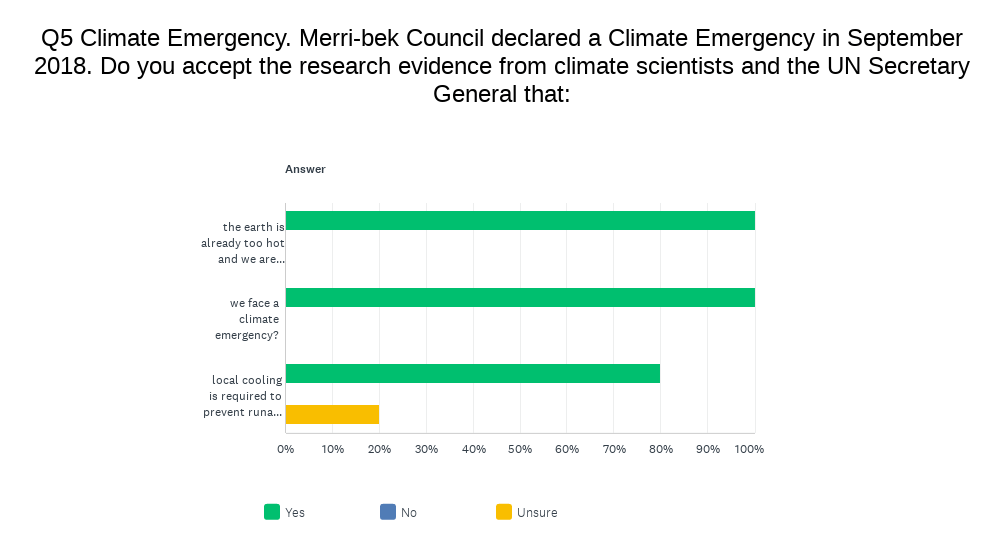
Louisa Bassini: Yes, Yes, Yes
Helen Breier: Yes, Yes, Yes.
Comment: focus on biodiversity protection and creation
Jay Iwasaki: Yes, Yes, Yes.
Comment: As an ecologist, climate change has coloured every aspect of my research over the last 10+ years. I’ve seen how denial has diminished, and communities are ready to take leadership.
Mel Yuan: Yes, Yes, Unsure
Owen Miller: Yes, Yes, Yes.
Comment: The Fusion Party is a signatory to the Climate Rescue Accord, a collaboration between Animal Justice, the Australian Progressive Party, and the Fusion Party.
Q6. Governance and Triple bottom line accounting brings to account three domains that we need for a good life. They are economic, social and environmental sustainability. In the past projects have been delivered based on organisational silos often not considering other aspects outside the silo. Will you endeavour as a Councillor for Council to use triple bottom line accounting on all Council infrastructure decisions to ensure that climate emergency priorities are embedded in Council decisions? Note that triple bottom line is already encapsulated in the Local Government Act 2020 Section 9, 2b and 2c for good Council governance.
Louisa Bassini: Yes
Helen Breier: Yes
Jay Iwasaki: Yes
Mel Yuan: Yes
Owen Miller: Yes
Q7: Transport: Upfield Rail Upgrade – Problems with parking and traffic congestion, capacity issues of public transport need solutions for upgrading the Upfield Line. According to Infrastructure Australia, the northern region Transport Corridor will reach and exceed capacity in the next decade. Do you support the Northern Councils Alliance campaign to Connect Melbourne’s North for duplication and extension of the Upfield rail line to Craigieburn and Wallan for provision of a more reliable and frequent rail service catering for the growing population in Merri-bek and residents in new growth suburbs further north?
Louisa Bassini: Strongly Agree
Helen Breier: Strongly Agree
Jay Iwasaki: Strongly Agree
Mel Yuan: Strongly Agree
Owen Miller: Strongly Agree
Q8: Transport: Mode shift – What actions will you be pushing for to facilitate a mode shift to more sustainable modes of transport in Merri-bek as part of, or beyond, Moving Around Merri-bek Strategy (PDF), including increasing safety for walking and cycling and increasing public transport advocacy?
Louisa Bassini: I support lower car speed limits where necessary to ensure greater pedestrian and cyclist safety. I support investment in cycling and pedestrian infrastructure. I support more efficient and accessible public transport and would advocate around this at a higher level.
Helen Breier: Yes
Jay Iwasaki:
In a dense suburb like Brunswick, there is often a perceived conflict between cars and alternative transportation. However, I don’t believe this should be the case. My elderly father is disabled, and I know all too well that there will always be a need to drive for people who are not able to use other modes of transport, and by making it easier to cycle and take public transport we can actually make it easier for those who really need to drive to be able to, and to find parking. There are many ways that cities around the world have created safe and inclusive transport environments for their residents.
1. Infrastructure: First we need to keep support and incentivise people to cycle and walk by creating safe ways to get around and supporting local businesses near to where people live. Traffic calming measures and lower speed limits may seem like barriers to driving, but they actually make communities better for everyone. Tried and tested shared roads can create communities by removing the dichotomy of “drivers vs. cyclists/pedestrians.”
2. Safe corridors to public spaces: An active lifestyle is pivotal to the health of our community, starting from how our kids get to school and parks. That also means easy ways to get to Sydney Road and other shopping precincts, with abundant cycle parking when we arrive. Prioritising these access ways with better infrastructure is something we can push for.
3. Sydney Road & the Upfield Line: State Greens and Greens on council have been pushing and will continue to push for increased frequencies of trains along the Upfield Line, along with accessibility improvements for Sydney Road. With Greens on council working with neighbouring councils, hopefully the state will listen to the north and we can finally finish the duplication of tracks that has been put aside for decades.
Mel Yuan: I think the key here is governance – how does Merri-bek execute and deliver on these strategies? More should be done to make lofty ideals a reality that are on time and on budget.
Owen Miller: Council really needs to assist in the uptake of cycling, through more modal filtering of traffic, more protection for bike lanes, and more enforcement against traffic violations which endager cyclists.
It’s also in our interests to create more beautiful, enjoyable paths so that active transport is appealing.
The council’s stance on street art is undermining our status as the cultural heart of Melboune and we see so many walls in a never-ending cycle between ugly tagging and ugly mismatched paint covering it up. If the council just left things alone, they’d see artists willing to spend time creating a beautiful masterpiece over the tags, confident that some busybody isn’t going to remove it.
Imagine getting to a situation where streets are closed off to cars because they’re too popular with cyclists and pedestians? I’d also like to see conucil facilitating the replacement of petrol engines with something more sustainable, whether it’s methanol, ammonia, biodiesel, or something else.
Q9. Heat Vulnerability: Large sections of Merri-bek’s north are at the extreme end of the Heat Vulnerability Index, meaning residents are very susceptible to global warming extreme heat events. What will you do to address this beyond exisiting policies, including Merri-bek Urban Heat Island Effect Action Plan (PDF), Merri-bek Urban Forest Strategy 2017-2017 (PDF), Cooling the Upfield Corridor Action Plan 2018-2028 (PDF)?
Louisa Bassini: Beyond implementation of local policies, I would advocate to the state government for urgent action to address climate change. I would also support all grassroots initiatives and community campaigns aimed at promoting sustainability.
Helen Breier: absolutely. Most important that these actions are recognised and implemented
Jay Iwasaki: As an ecologist, heat vulnerability to wildlife has been a key part of my research. I will support Merri-bek Council’s existing strategies to reduce the urban heat island effect in our communities via tree planting and replacing concrete with natural areas. With council support, we can work on expanding programs like solar savers (assisting low income households to install solar panels and insulation) and find other novel solutions to keep the community cool.
Mel Yuan: We have plenty of strategies but how is reality meeting these goals? What measures are we using to assess progress? Is it working? Are we getting value for money in these initiatives?
Owen Miller: To deal with heat islands, we really need to be reducing the popularity of car parks, and replacing these exposed concrete surfaces with swales and trees. Sure, humans can stay inside with air conditioning, but our local wildlife doesn’t have this luxury when dealing with more frequent heat waves. For popular streets like Sydney Road and Lygon Street, we might like to spray rainwater on the road on hot days, to keep the area cool.
Q10. Waste Management. Merri-bek aims to be a leading council in sustainable waste management. What will you do to help Merri-bek in educating citizens on waste streams , to achieve Merri-bek’s 2030 zero waste to landfill target as part of Zero Carbon in the Planning Scheme – ESD Policy v2.0?
Louisa Bassini: I would take all opportunities to promote these policies, but also advocate at a higher level for more urgent and structural changes to waste management, such as bans on single use plastics.
Helen Breier: Yes
Jay Iwasaki: I am committed to Merri-bek’s 2030 target of zero waste to landfill and communicating strategies to reduce waste to the public. I am also committed to changing the responsibility of managing waste to the manufacturer, rather than the consumer.
Mel Yuan: Council provide professional and available advice on better waste. We need evidence to assess if these are effective and where they are not.
Owen Miller: The educational initiatives of governments are increasingly difficult due to the global availability of compelling distractions. One of my policies is to move towards open-source software for powering the government, allowing civilians to be involved in the website and the processes of government. This would allow compelling content creators to be a part of any government initiatives, increasing the ability of councils to connect with residents.
I’d also like to see more local composting sites. These would each need a caretaker. By increasing the visibility of these practices, it helps them gain popularity and understanding.
When I lived in New York, there was a shared composting site in a nearby park, then I found out I could sign up my apartment building for the city’s composting collection. So many people just aren’t aware of how easy it is to change their waste habits.
Q11. Energy Efficiency and Renewables. Merri-bek has a goal of “Efficient and 100% renewably powered energy”. How can Merri-bek “walk the talk” on renewable energy and meet the community goals set in the Zero Carbon Merri-bek – Climate Emergency Action Plan 2020/21 – 2024/25 (PDF)?
Louisa Bassini: I believe the community in Merri-bek would be committed to the significant structural changes needed to achieve zero carbon, but they need to be aware, engaged and supported in this and I would seek to assist that wherever possible. These changes really demand a community campaign that can impact wider thinking and be used as leverage to insist on governmental and business changes as well.
Helen Breier: absolutely
Jay Iwasaki: I am committed to following the strategy of the Merri-bek climate emergency action plan, and if possible accelerating aspects that are feasible. I would also be keen to see the new Brunswick community battery expanded to help reduce strain on the local grid and expand solar power usage.
Mel Yuan: The energy market is changing rapidly. Solutions from even 5 years ago may not be relevant now. We are in a situation where renewables are being “thrown away” from the grid in times of excess supply. New strategies are needed.
Owen Miller: Besides the extra support for cycling, we could also help kickstart the infrastructure around converting existing vehicles to methanol, ammonia or biodiesel. This would involve engine conversion, as well as refuelling facilities. Electric cars have significant embodied emissions and I believe that electric cars are not here to save the planet, they’re here to save the car industry. One of the suggestions in the plan is to have a clean tech incubutor hub − I would definitely support the creation of coworking spaces in Merri-bek with purified air. It would allow residents a calm space to do their best work, doubling down on the creative and innovative spirit of our community. We are missing out on untapped potential to get our community more involved in the transition to a clean and renewable society.
Q12. Supporting business and the environment. What actions will you take to help the Council promote environmentally sustainable jobs in the municipality and for businesses to reduce emissions in their operations?
Louisa Bassini: I will consider sustainability in all decisions that come before council if elected. I believe that business should be supported to transition to sustainable practices wherever possible, but required to through regulation where necessary as well. I would advocate for these approaches at a state level also.
Helen Breier: as a previous business angel in the green space this is my field of expertise. Business needs practical assistance with planning and establishment and information on ways to reduce emissions. Obviously some incentives
Jay Iwasaki: Continue to support the programs within Zero Carbon Merri-bek strategy that support businesses with recycling, reusing, waste minimisation and energy efficiency.
Mel Yuan: Merri-bek may, not may not, be well suited to environmentally sustainable jobs – depending on what these are. Businesses are driven by cost. Council is limited on how it can address businesses’ behaviour to reduce emissions.
Owen Miller: Council is responsible for ensuring food hygiene locally. In making readily available maps about the food safety ratings for restaurants, they could also allow users to find out about the environmental practices of the restaurants. It could be a good way for residents to find out about the enormous environmental impacts of beef for instance.
Q13. Food Security. How would you build community resilience and address food security in Merri-bek beyond the existing Merri-bek Food System Strategy 2024 – 2027 (PDF)? How do you think Council could further support culturally relevant and nutritionally rich food to diverse and vulnerable communities?
Louisa Bassini: I support urban food farming and consider this to be not only an important strategy to promote food security but also a way in which community members can be engaged in caring for land. I understand that communal gardens also have great benefit for social health and cohesion and would promote where possible.
Helen Breier: Promoting and informing
Jay Iwasaki: I support existing strategies from Greens on council. “The Food System Strategy is only in the first year of its current iteration and so needs time to progress. This strategy really is groundbreaking for a Council and recognises the complex intersections of climate change, socio-economic status, community resilience and food security.”
Mel Yuan: I think Council’s strategy on this topic, while worthy, is more hope than concrete and meaningful action. Merri-bek is a highly urbanised area with no primary production space. At best, food production is limited to household or public green open space. Care should be taken in promoting solutions that are inequitable (expensive), inefficient (too small scale), or unsafe (due to urban waste & pesticides). Multicultural communities with their own food cultures do not need local government to patronise their cultural practices. Securing Australia’s food security requires, at least, national coordinated action between the primary industries sector, government, all planning frameworks, and trade organisations. People who experience food insecurity due to social disadvantage, low wages and high prices need significant social assistance, not a weekend farmers’ market with expensive organic produce. Scarce public funds should not be spent which effectively cross-subsidise more expensive food choices by the wealthy.
Owen Miller: I don’t agree with supporting culturally relevant food − when people talk of Italian food for instance, they’ll inevitably mention tomatoes, even though tomatoes were only introduced to Europe after the discovery of South America. Few people are aware that cows were invented only 10,000 years ago after selective breeding of the auroch. If people aren’t even prepared to change a part of their diet, then what hope do we have for avoiding catastrophe? In order for council to support nutritionally rich food, council could work with our wastewater companies to provide more biological analysis of wastewater, discovering the health of humans in the area. Council could also fund the development of open-source software for tracking meals and food purchases, allowing residents to more easily analyse and optimise their behaviour. Finally, council could provide more compelling active transport options and exercise equipment, spurring people into healthier lifestyles where they’ll become inspired to improve their health further.
Q14. Buildings, Biodiversity and Urban cooling: What would you do as a Councillor to ensure that with new building developments, Merri-bek residents have protection from overshadowing existing solar PV systems, and that Merri-bek has sufficient vegetation cover to contribute to biodiversity outcomes, urban cooling, and water sensitive urban design beyond existing policies in the Urban Forest Strategy (PDF), Merri-bek Nature Plan, and the Achieving Zero Carbon in the Planning Scheme – ESD Policy v2.0?
Louisa Bassini: My knowledge on these issues beyond what is established in the policies referred to is limited. However, I fully recognise the importance of these planning issues and would seek out expert recommended best practice approaches to further my understanding, and ensure any decisions I make are aligned with promoting sustainability over profit-driven development.
Helen Breier: All of the above need to be ensured. Some such as passive solar are virtually cost free- just needs a different approach. I have a big problem with clothes dryers
Jay Iwasaki: I support the current policies and would like to see them expanded with additional funding wherever possible. In terms of planning: “Regarding planning, many of the controls are out of Council’s hands and are subject to the approval of the state Planning Minister. This is most evident in the Elevating ESD in the Planning Scheme Amendment that has been sitting on the Minister’s desk for many months now, resulting in multiple Councils not being able to enforce higher environmental standards in new builds.”
Mel Yuan: I would like to see genuine outcomes from these existing Council strategies. Have any of them been implemented? Were the desired outcomes reached? We are entering a phase where solar panels are less economical for individual households and planning schemes are more scorecard-driven. I am critical of the tree-planting targets and their genuine effectiveness.
Owen Miller: I don’t agree that development should be stopped on the basis that it will overshadow someone’s solar panel − the person installing the panel would’ve known this was a possibility, and it should be feasible to repurpose the panel. For urban cooling, we could put more pressure on devolpers to create swales for the guttering outside their buildings. We could also see about requiring developers to tie cables across streets, to allow vines to grow.
Q15. What are your top four priorities for the Council Plan, to be formulated for 2025-2029.
Louisa Bassini:
1. Housing security/ renter representation
2. Sustainable, equitable and liveable development
3. Improved and accessible transport infrastructure
4. Opposing council sell-offs and a return to strong services
Helen Breier:
1. more open green spaces
2. effective street litter management, protecting waterways
3. safe roads and travel including lower speed limits
4. scientific approach to weed management and poison overuse
Jay Iwasaki:
1. Collaborating to form a cross-council pollinator & biodiversity corridor
2. Ensuring development along the Upfield Line incorporates public spaces, in particular, green spaces
3. Collaborating with university researchers to fund graduate students projects examining solutions to climate change in our community
4. Committing to exploring the treaty process with traditional owners
Mel Yuan:
1. Addressing the new State Government planning frameworks which re-craft the role of local government in planning
2. Better governance and accountability for the laundry list of existing Council strategies
3. Keeping pace with needed infrastructure for roads, bike paths, footpaths, water-sensitive urban design, open space and other civic amenities with ever-increasing density
4. Local economic development. We are not realising the economic, employment and social potential of much of our mixed use and commercial zones which could unlock more sustainable employment and greater social cohesion in the inner north
Owen Miller:
1. All council software should transition to open-source, and the websites themselves should similarly enable collaborative editing with residents.
2. Council should be doing more to endorse green development: green concrete, green steel, swales, and wildlife corridors.
3. Council should assist in the proliferation of cycling, especially through the installation of protections for cycle lanes.
4. Council should embrace street art and stop trying to censor our culture which has made Brunswick East the 6th coolest neighbourhood in the world
Q16. Democracy and representation: advocacy to State Government on multi-member wards versus single member wards. The state government has imposed single-member wards on Merri-bek against the recommendation of the council, the Local Government Association of Victoria, and even the Victorian Electoral Commission. This shift in electoral structure is an imposition by the parliament, not a choice of experts.
Do you support or oppose single-member wards?
If (re)-elected will you initiate and/or support measures to pressure the state government to return to multi-member wards?
Louisa Bassini: Oppose single member wards, support measures for multi-member wards
Helen Breier: Support single member wards, undecided about measures for multi-member wards.
Comment: single members can not hide behind other active councillors
Jay Iwasaki: Oppose single member wards, support measures for multi-member wards.
Comment: Single-member wards are a step backwards in representative democracy for the community. Despite being a member of the Greens, I strongly support the ability of independent candidates to be able to have a chance to represent their community, and I believe single-member wards make this more difficult.
Mel Yuan: Oppose single member wards, support measures for multi-member wards.
Comment: Single-member wards are specifically designed to hand local government into the hands of political parties. Anything which reduces the diversity in democracy is a retrograde step. This local council election cycle is a sad one for Victorian democracy.
Owen Miller: Oppose single member wards, support measures for multi-member wards
Q17. Do you have any other comments on Climate Leadership and Advocacy by Council? Do you have any supplementary comments relating to the questions above, comments on other issues related to climate resilience and climate adaptation, or comments on making decisions for the whole municipality?
Louisa Bassini: Skipped.
Helen Breier: Actions need to be real and effective rather than purely ideological. After many years of supposed green councillors we still face the same issues as there has been a lot of talk for brownie points but little effective management and action
Jay Iwasaki: This was a massive amount of information to work through. Clearly a lot of thought and attention has been given to these important questions. Professionally as an ecological researcher, many of these topics have been revelant to climate change mitigation for biodiversity conservation, including in urban environments. On council, I will use my experience and expertise to integrate climate solutions wherever posisble.
Mel Yuan: We are at an inflexion point in the energy market in Australia. The community need new messages about what their governments should, and can, do to address Climate Change. It is particularly concerning that many young people see the “Climate Crisis” as such an existential challenge that change is not possible and that their futures are out of their hands. Rather than motivating young people, the debate has scared young people into inaction.
Owen Miller: It’s unfortunate that voters have voted for climate inaction for so long, but for those who now want our climate emergency to be addressed, please be aware that Fusion is the most committed. All options are on the table for us, even geo-engineering.
Stop Burning Plastic Pledge
The Stop Burning Plastic pledge not to burn waste. Merri-bek already has a Council policy not to use Waste to Energy Incinerators and to progress to zero waste to landfill by 2030. (see section 4.6.3 of Council Waste and Litter Strategy 2018) . Cleanaway is presently proceeding with an EPA Victoria development licence for a Waste to Energy Incinerator at Wollert. Signing this pledge commits to continuing present Council policy direction regarding sustainable circular economy waste management. Note: A week ago Minister for Climate Action and Energy Lily D’Ambrosio (Mill Park), Thomastown MP Bronwyn Halfpenny and Yan Yean MP Lauren Kathage supported the community in opposing Cleanaway’s Waste to Energy Incinerator. (Facebook Post) This is a statewide pledge:
Jay Iwasaki, Helen Brieier, and Owen Miller all signed the pledge. As at 2 October no pledges by the other candidates.
Jay Iwasaki commented: In Australia, waste incineration is simply not the best option at this point. Incinerators are expensive and require long term committments which create perverse incentives, increasing demand for fuel (waste) to maintain public investment. This also comes at the expense of recycling, material reductions, and competition with renewable energy.
Helen Breier commented: Couldnt agree more- as once a green business angel (private equity) this technology was always a greenwash
Owen Miller Commented: It makes sense not to lock ourselves into a long-term plan for continuing to produce waste.
Streets People Love Candidate Scorecard
The Streets People Love campaign has created scorecards for candidates in the 2024 council elections in Victoria. Scorecards have been generated based on a candidate’s engagement with the Streets People Love campaign, their commitment to our pledge, their responses to a survey and input from campaign members located in the local government area in which they are running. The local community groups running this scorecard in the City of Merri-bek are Walk on Merri-bek and Merri-bek Bicycle Users Group Inc.
Streets People Love Bulleke-bek ward candidate Scorecard .
Waterways – Vote for Merri Creek
Friends of Merri Creek have surveyed candidates in all wards. The Merri Creek corridor is iconic and questions of sustainability, pollution and biodiversity should be a municipal wide concern to all candidates. The survey is focussed on Merri Creek, Edgars Creek and Coburg Lake, and neglects Merlynston Creek and Campbellfield Creek tributaries. It also ignores the importance of Moonee Ponds Creek and tributaries such as Westbreen Creek on the western side of the municipality, which may provide a reason why candidates from western wards like Djirri-Djirri and Pascoe Vale South did not respond to the survey.
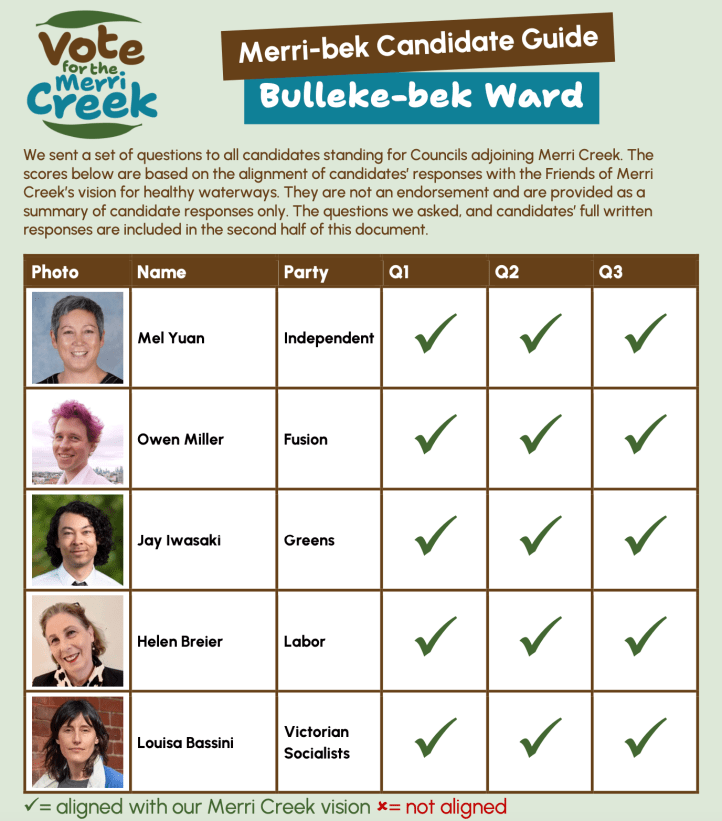
See Friends of Merri Creek 2024 election guide for six Councils in the Merri Creek Catchment.
View the Candidate responses for Merri-bek wards (PDF) for candidate comments.
Q1: Are you concerned about the protection and restoration of the Merri Creek, Edgars Creek and Coburg Lake? If so, what concerns you the most? (100 word limit)
Q2: What action do you plan to take in your role as Councillor – if any – to increase waterway protection and restoration activities along the Merri Creek, Edgars Creek and Coburg Lake? (100 word limit)
Q3: Briefly outline how as a Councillor, you will respond to three of the following threats to the health of the Merri Creek, Edgars Creek and Coburg Lake: (75 word limit per threat)
• Development encroachment
• Pollution, litter and sediments carried by stormwater drains
• Illegal dumping and littering
• Spread of problematic weeds
• Loss, degradation and reduced connectivity of habitat
• Irresponsible pet ownership
References
Brunswick Voice, 23 September 2024, These 18 candidates want your vote next month https://brunswickvoice.com.au/these-18-candidates-want-your-vote-next-month/
Brunswick Residents Network Election Update https://mailchi.mp/optusnet/brunswick-residents-news-17250733
See Merri-bek Victorian Socialists Instagram account on Merri-bek candidates https://www.instagram.com/vsmerribek/?hl=en
Political comment Authorisation
Please see our Authorisation statement
 Climate Action Merribek