Flood disaster emergency in the NSW mid north coast and Hunter regions due to unprecedented record breaking torrential rain. Remember climate change means a warmer atmosphere carries more moisture with a rule of thumb: 7% for each degree of warming. We are at 1.5C. Most news stories don’t mention how climate change influences record breaking floods.
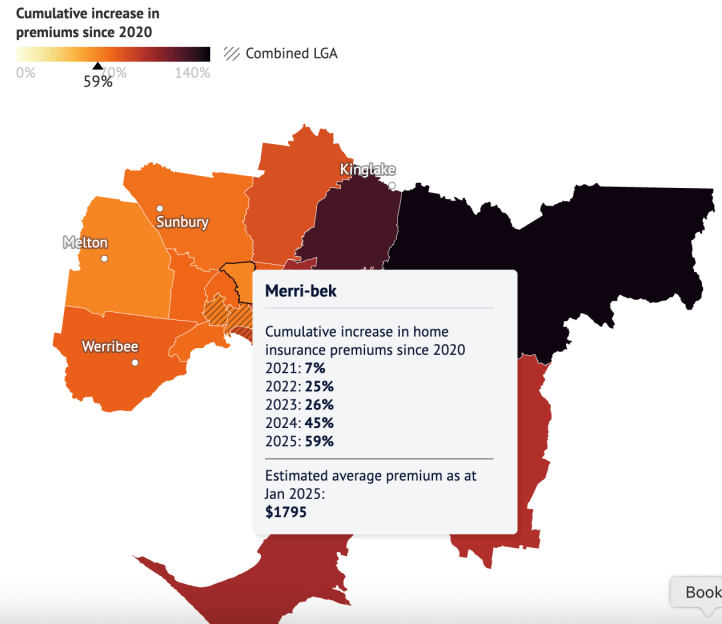
This will also add to the climate disasters driving up our Insurance Premiums adding to our Cost of Living, even in Merri-bek.
Here are some stories from the ABC and The Guardian:
- Unprecedented flood levels: NSW flooding live updates: Thousands isolated, hundreds rescued in record breaking flooding in NSW https://www.abc.net.au/news/2025-05-21/weather-warnings-for-nsw-blog/105316494
- One in 500-year flood isolates almost 50,000 people in NSW as BoM warns of more rain https://www.theguardian.com/australia-news/2025/may/21/nsw-weather-bom-warns-of-lots-of-flooding-to-come-on-mid-north-coast
- Stock losses, stock washed downriver, and property damage have been recorded across the region in ‘diabolical floods’. https://www.abc.net.au/news/2025-05-21/mid-north-coast-hunter-farmers-devasted-by-flooding/105319008
- Homes evacuated, flood warnings in place as rain continues to batter NSW https://www.abc.net.au/news/2025-05-20/nsw-flooding-severe-weather-mid-north-coast-hunter-regions/105310154
- Rain moving down the NSW coast may bring drought relief to Murray Basin https://www.abc.net.au/news/2025-05-21/drought-relief-flood-rain-weather-nsw-coast-victoria-south-aus/105314212
Here are details how climate change influenced this event:
- Climameter rapid event attribution: Heavy rain in May 2025 New South Wales floods locally intensified by human-driven climate change https://www.climameter.org/20250520-new-south-wales-floods
- 23 May 2025 Climate Council – Climate Council Statement On NSW Floods: More Destructive Due To Climate Change . 3 ways climate change influenced the event. https://www.climatecouncil.org.au/climate-council-statement-on-nsw-floods-more-destructive-due-to-climate-change/
- 25 May 2025 – The NSW floods have already been linked to climate change. Scientists are debating if that’s too quick https://www.theage.com.au/environment/climate-change/the-nsw-floods-have-already-been-linked-to-climate-change-scientists-are-debating-if-that-s-too-quick-20250523-p5
The Manning river at Taree had flooded at a level not seen before, surpassing the 1929 record of 5.9 metres, reaching 6.37 metres at 9am on Wednesday , the Bureau of Meteorology’s Steve Bernasconi said according to The Guardian. Bernasconi said the 412mm of rainfall Taree had received over two days was five times its monthly average rainfall for May and a third of its average annual rainfall.
New Leader of the Greens, Larissa Waters, is one of the few people publicly linking the dots:
“This is the climate crisis, and how much more can we expect people to bear?” she asked during an interview with ABC’s Afternoon Briefing on Wednesday 21 May.
“I am from Meanjin, Brisbane, where we get big floods like that too, and it is so devastating, it is devastating to infrastructure.”
Waters said the floods are happening because we are “burning too much coal and gas”, but said that we “don’t have to keep doing that”.
“We’ve got amazing clean energy reserves here in Australia. We know they produce more jobs than old dirty fossil fuel energy, and we know they are cheaper, so we can keep people’s power bills down and protect us from those worsening so-called natural disasters if we do that transition to clean energy.”
Climate driven Warmer waters and a blocking high
Waters off the NSW east coast have been warmer than normal. This means more moisture can be carried by the atmosphere driving more intense rainfall.
Scientists have calculated a rule of thumb that for every 1 degree C of warming about 7 per cent more moisture can be carried in the atmosphere. We are presently at 1.5C of global warming which means that more than 10% more moisture. CSIRO highlights in the State of The Climate 2024 report:
“Observations show an increase in the intensity of heavy rainfall events in Australia. The intensity of short-duration extreme rainfall events has increased by around 10% or more in some regions and in recent decades. …
“The intensity of heavy rainfall events in Australia is increasing as the climate warms. Warmer air can hold more water vapour than cooler air, and moisture in the atmosphere can increase by 7% per degree of warming, all other things being equal. This can cause an increased likelihood of heavy rainfall events, even in areas where average rainfall is likely to decrease such as some regions of southern Australia.
“Observational data indicate that daily rainfall extremes that happen once per year or less often are likely to intensify by an average of about 8% for each degree of global warming, although this varies with region. Hourly extreme rainfall is also likely to increase by around 15% per degree of warming, well above the 7% that would arise from increased moisture content in a warmer atmosphere alone.

A blocking High in the Tasman Sea is directing a rain front along the mid north coast and will drive it westwards and down into Central Victoria.
Here is how two climate academics described if climate change is a factor. Andrew King
is Associate Professor in Climate Science, ARC Centre of Excellence for 21st Century Weather, at The University of Melbourne. Andrew Dowdy is Principal Research Scientist in Extreme Weather, The University of Melbourne. They wrote at The Conversation:
“Projecting all types of precipitation is difficult. The water cycle is complex. Climate models – while powerful – can struggle to accurately simulate local rainfall patterns. And these patterns vary considerably over time – a natural phenomena that can make the climate trend hard to identify.
So what does this mean for autumn rainfall projections for Australia in future? None of the rainfall projections show a strong signal, and so scientists do not have high confidence in the results.
Having said this, there’s a hint of a drying trend across southwest Western Australia and parts of western Victoria and southeast South Australia, where conditions are dry now.
And for the Mid North Coast of NSW, currently experiencing heavy rain and flooding, autumn rainfall projections hint at slightly at heavier extreme rainfall.”
So how does this flood disaster affect us here in Merri-bek?
We will likely see rain in Melbourne this coming weekend, which for us will largely be welcomed. But it is unlikely to reach Western Victoria which is in extreme Drought. Although they may see some minor showers from a rain front moving east.
More indirectly, this flood disaster will add to the series of extreme weather related disasters which are driving up Insurance premiums across the board. This will add to insurance premiums as Insurance Companies seek to carry the load of payouts across all their clients and their Re-insurance Companies.
Here in Merri-bek, insurance premiums have risen cumulatively by 59% over the last five years from 2020. Many of the outer suburban and eastern suburb Local Government Areas saw more hefty increases related to more direct risk.
Insurance Council of Australia chief executive Andrew Hall in the Age called for a 10-year, $30 billion flood defence fund that would be jointly funded by federal and state governments, to develop flood defences, retrofit homes and relocate people where no other mitigation was possible.
“The cost of extreme weather is growing,” he said. “Over the past five years, the annual average insured cost of extreme weather has reached $4.5 billion [nationwide], 64 per cent higher than the previous five-year average.
“This trend is expected to worsen, which is why we must invest in risk reduction, mitigation and adaptation.”
This NSW Flood disaster will add to our insurance premiums.
The Victorian budget contained no extra funds for climate adaptation to reduce Disaster recovery response.
References
21 May 2025 – The Conversation – NSW is copping rain and flooding while parts of Australia are in drought. What’s going on? https://theconversation.com/nsw-is-copping-rain-and-flooding-while-parts-of-australia-are-in-drought-whats-going-on-257235
19 May 2025 – The maps that show how climate change is driving up the cost of insuring Melbourne homes https://www.theage.com.au/environment/climate-change/the-maps-that-show-how-climate-change-is-driving-up-the-cost-of-insuring-melbourne-homes-20250513-p5lyv5.htmlInsurance Council of Australia: “The Cost of extreme weather is growing.”
CSIRO State of The Climate 2024 report https://www.csiro.au/en/research/environmental-impacts/climate-change/State-of-the-Climate/Australias-Changing-Climate
 Climate Action Merribek