On Sunday 4 February the Federal Government announced a final consultation for New Vehisle Emission Standards. This applies to new vehicles imported to Australia to reduce total fleet emissions. It will result in more fuel efficient petrol and diesel cars and electric vehicles being available. Introduction of the standards will not increase new car prices, as shown by similar standards enacted in other countries such as New Zealand.
Australian cars on average use 20 percent more fuel than vehicles in the United States. Australia and Russia are the only two developed nations presently with no fuel efficiency standards, which has resulted in Australia becoming a dumping ground for models without the latest efficient technologies.

Topline analysis of the 86 page Impact Analysis report:
- The government’s preferred model is a strong and robust standard.
- The preferred model puts Australia on track to achieve its carbon pollution targets in line with the Paris Agreement and our Nationally Determined Contributions.
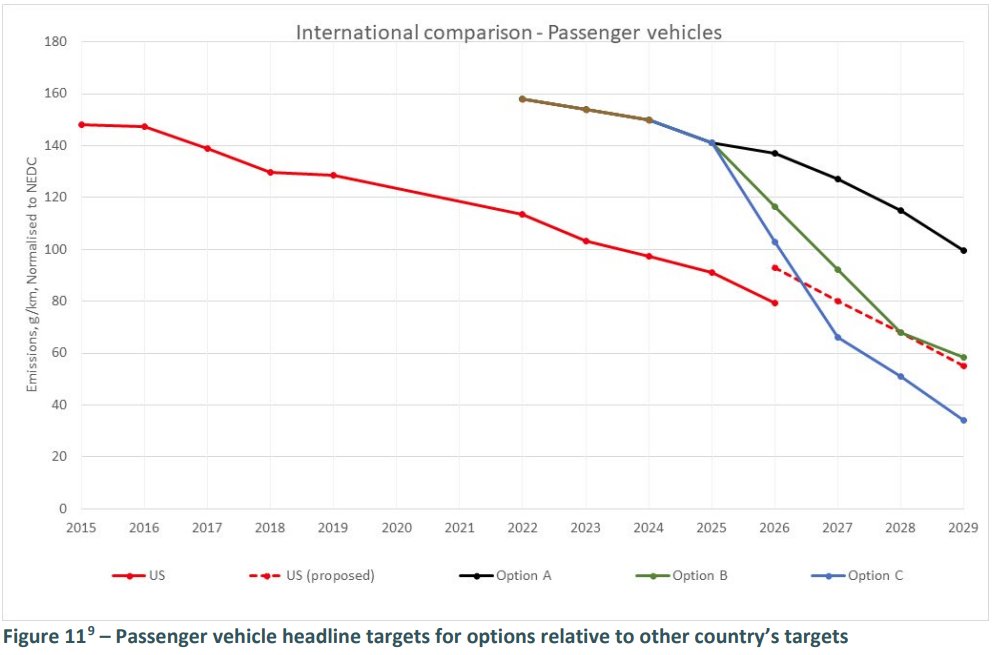
- By 2028 it will align Australia with similar standards in the USA, where cars are currently 31% more efficient and utes are 24% more efficient than in Australia.
- Australians will have more choice of new cars that use less petrol.
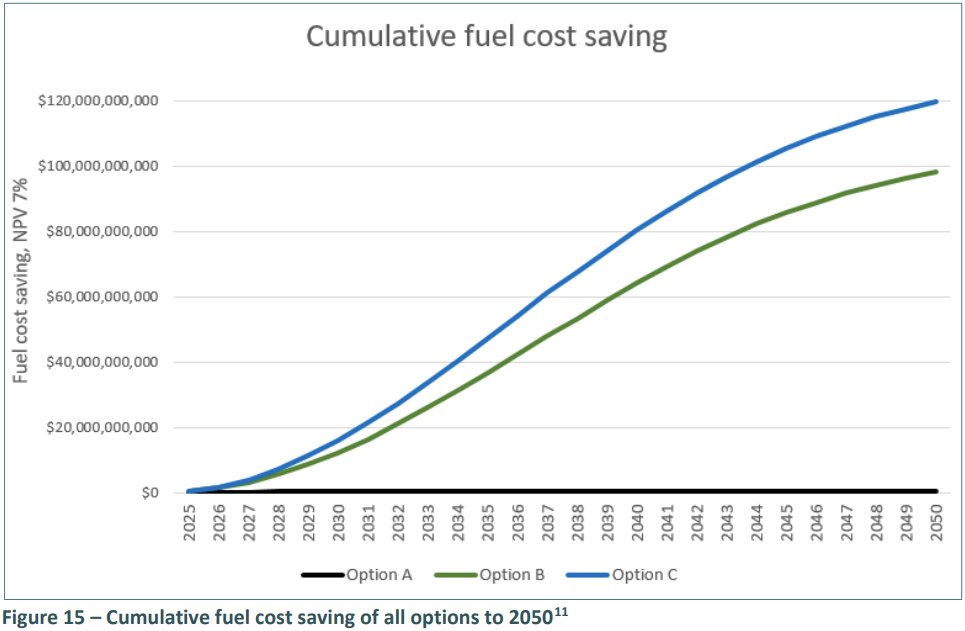
- Standards will save $108 Billion in petrol for Australian families to 2050
- It delivers a 40% reduction in petrol costs for the average new car buyer in 2028
- Regional and remote Australians will benefit most, because they drive the furthest.
- The department found that the standards petrol car lobbyists have suggested would achieve virtually nothing, with “negligible” reductions in petrol costs and pollution.
- Standards apply to international car companies, requiring them to reduce the average emissions of the cars they sell by bringing a greater range of efficient models. The preferred option is robust with no loopholes for international car companies.
- Standards only apply to new cars, vans, and utes. Existing vehicles and used cars are not affected.
- Most countries already have standards, including the USA, and 85% of the global market.
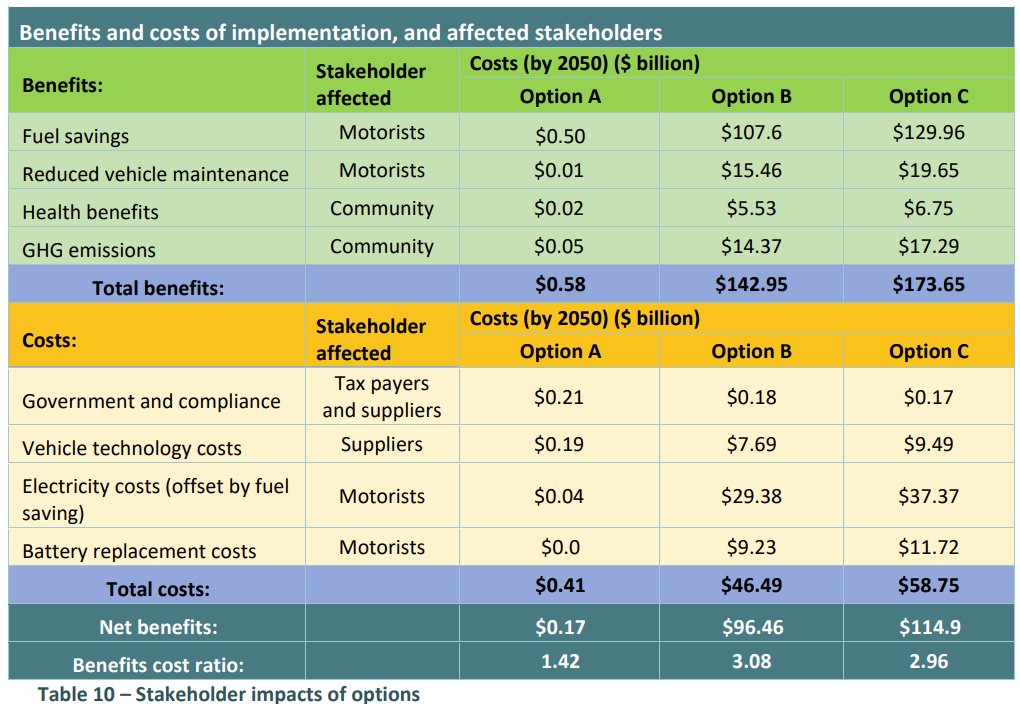
The Government has proposed three options for the New Vehicle Emissions Standard, with a preference for Option B. the following options description is taken from section 7.1:
Option A: Slow start
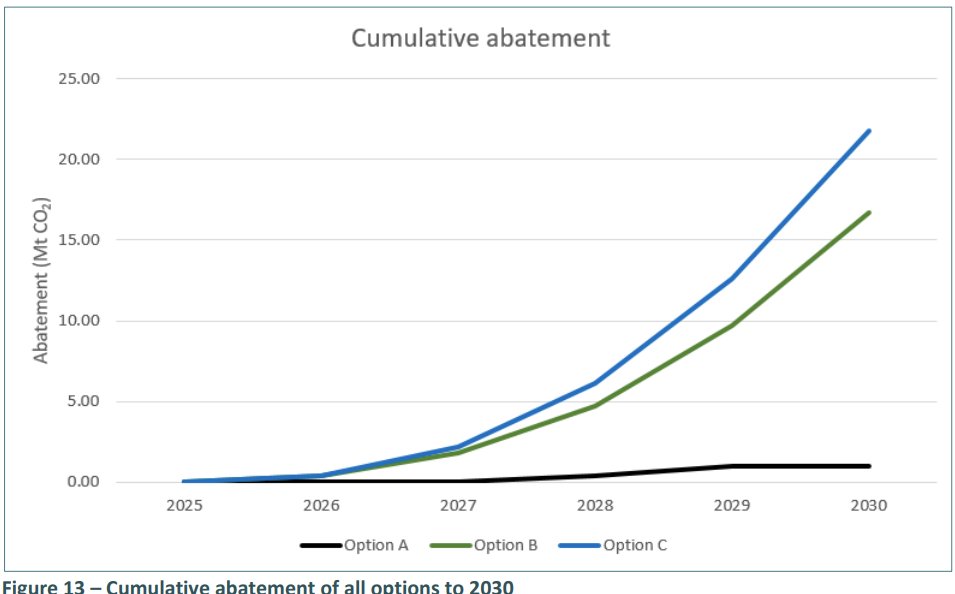
Option A returns a Benefit Cost Ratio (BCR) above 1, but it also provides negligible abatement above business as usual activities. This fails the guiding principle that the NVES must be effective in reducing emissions in line with Australia’s commitments under the Paris Agreement and Climate Change Act 2022. While it poses no material risk to the continued supply of existing vehicle technology, by failing to require emissions reduction above business as usual activities, it does not provide sufficient incentive for vehicle suppliers to provide the best fuel saving technology and low and zero emissions vehicles to the Australian market.
Because of this it also fails to meet the equitable and the enabling guiding principles. Option A also does not meet the guiding principles of simple and transparent, and credible and robust due to the inclusion of a wide range of technology credits which obscure the real emissions reduction and fuel cost saving provided by the NVES.
Option A does however establish a NVES framework, and once established it would be possible to ramp up from there.
Option B: Fast start and flexible
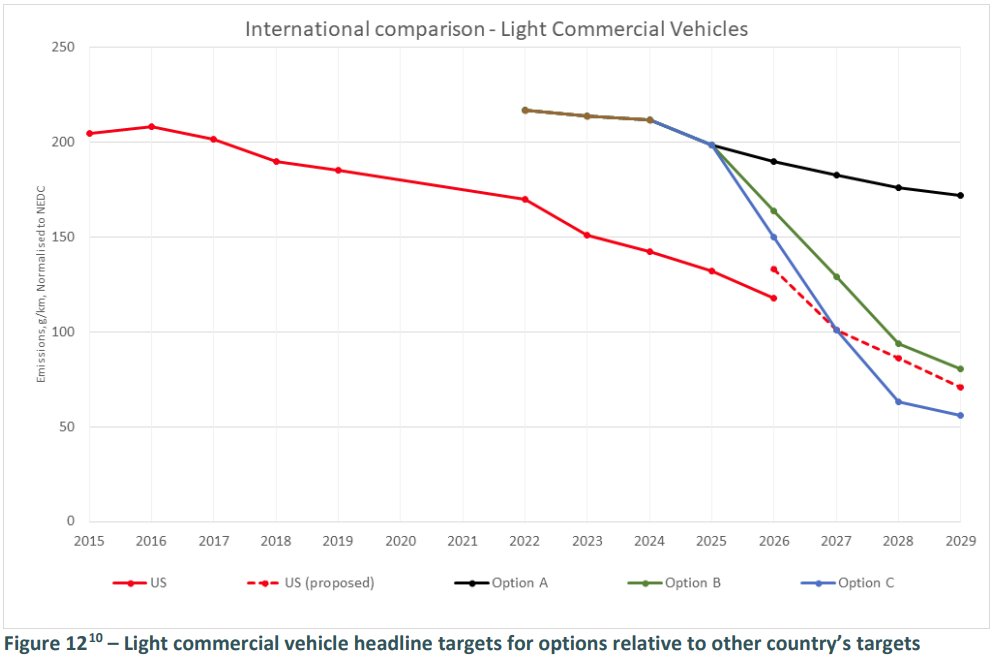
Compared to Option A, Option B is an ambitious standard that returns a higher net benefit, a strong positive BCR and very large abatement to support achievement of Australia’s commitments under the Paris Agreement and Climate Change Act 2022. The strong abatement generated by this option meets the guiding principle that the NVES should be effective, with an approximate 61% reduction in average new car emissions from 2024 to 2029 to reach alignment with the US around 2028. The effectiveness of this option is further supported by excluding supercredits and off-cycle credits which erode the real emissions reduction and fuel cost savings provided by the NVES.
A key risk from an ambitious standard is the availability of technology and a vehicle mix to comply with the targets. Australia is predominantly a technology-taker for new vehicles, particularly in the short term (up to 5 years). Vehicle suppliers do have options to adjust technology offerings to supply more fuel saving technology to existing models, adjust marketing strategies and increase the model range of hybrid and EV models from those available in similar markets to Australia. This risk is difficult to reliably monetise, so this analysis is qualitative.
Option B progressively reaches alignment with the stringency of the standards in the US around 2028, and then reflects those standards again in 2029. In this way, Option B seeks to ensure that a full range of technology and vehicle choices are available for Australians. To further protect small cars that are typically the most affordable vehicles, Option B provides a more lenient CO2 target for vehicles with a mass in running order of less than 1500kg. Taken together, this supports achievement of the equitable and enabling guiding principles.
Option B excludes technology credits which reduce the transparency, emissions reduction and fuel cost savings provided to consumers by the NVES and Option B supports achievement of the guiding principles of simple and transparent, and credible and robust.
Option C: Fast start
Option C is a fast and aggressive NVES that would have Australia reach alignment with the US around 2026, and then accelerate beyond those markets by applying targets from the US in 2030/31 to the Australian NVES in 2028 and 2029. It brings the greatest abatement and net benefit of the options considered. The strong abatement generated by this option supports Australia’s commitments under the Paris Agreement and Climate Change Act 2022, and supports meets the ‘effective’ guiding principle.
The very rapid emissions reduction required under Option C risks providing insufficient time for the vehicle industry to adapt the technology offerings and vehicle supply to Australian consumers sufficiently to ensure the continued supply of vehicles Australians need, particularly affordable cars and cars needed by people in rural and regional areas. On this basis this option does not meet the ‘equitable’ or ‘enabling’ guiding principles.
The absence of supercredits and off-cycle credits supports the ‘simple’ and ‘transparent’ guiding principle. By substantially exceeding the stringency of NVESs in the US in the later years, recommending this option would require confidence that the necessary technology and fleet mix would be available to meet these targets without undue disruption to vehicle model availability. We were not able to establish the evidence base to support that confidence, so consider this option does not meet the enabling guiding principle.
Recommended option: Considering all the available information, analysis and consultation, Option B is the recommended option for an Australian NVES.
Comment: Emissions abatement of Option A is very minimal. It should be ruled out. Option B gives good abatement and would put Australia on par with US standards by 2028. Option C is more ambition.There are some risks with this, but because we are coming from the back there is equally an agument that we need this level of ambition.
The Start date is presently proposed as 1st January 2025, but there is no reason why we can’t start the standard from 1 July 2024 with a 6 months trial period to get the systems up and running, to add flexibility.
The Smart Energy Council also prefers Option C.
Whilst strongly supporting the new policy, the Smart Energy Council urges the Australian Government to increase its ambition and meet and beat the United States’ standard by 2026.
John Grimes, Chief Executive of the Smart Energy Council said:
“New Vehicle Efficiency Standards raise the standard for easing cost of living pressures and delivering climate action at the same time.”
“Australians are paying far too much for petrol, having been forced to drive much less efficient cars than any other developed country. This must, and will, change.”
“Australians will be spending at least $1000 a year less on petrol with new cars by 2028 with New Vehicle Efficiency Standards and if the Albanese Government adopts the most ambitious approach, Australians will be getting even greater savings even earlier.”
“New Vehicle Efficiency Standards could be the most important policy to slash Australia’s soaring transport emissions in history and if the Albanese Government adopts the most ambitious approach, we will see greater emissions reductions even earlier.”
Smart Energy Council, 4 February 2024
Some graphs highlighting the comparison of the 3 options

References:
Department of Infrastructure and Transport, 4 February 2024, The Australian Government is introducing a New Vehicle Efficiency Standard for cleaner and cheaper-to-run cars https://www.infrastructure.gov.au/infrastructure-transport-vehicles/vehicles/australian-government-introducing-new-vehicle-efficiency-standard-cleaner-and-cheaper-run-cars
Submissions on the NEVS closes at 11.59pm on 4 March 2024.
Department of Infrastructure and Transport, 4 February 2024, Cleaner, Cheaper to Run Cars: The Australian New Vehicle Efficiency Standard—Consultation Impact Analysis, https://www.infrastructure.gov.au/department/media/publications/cleaner-cheaper-run-cars-australian-new-vehicle-efficiency-standard-consultation-impact-analysis
Smart Energy Council, 4 February 2024, Big win for Australians – The government announces New Vehicle Efficiency Standards! https://smartenergy.org.au/articles/big-winner-australians-the-government-announces-new-vehicle-efficiency-standards/
 Climate Action Merribek
[…] FEBRUARY 7, 2024 – New Vehicle emission standards proposed to start from 2025 […]
LikeLike