In July Climate Action Merribek signed on to a statement by 56 NGOs on a Net Zero Roadmap. We put in our own detailed submission also to this consulation.
The consultation document was some 100 pages in length with 29 survey questions to draw out responses across all areas of transport.
We agreed with the five guiding principles and the Avoid-Shift-Improve Framework
- 1. Maximise emissions reduction
- 2. Value for money
- 3. Maximise economic opportunity
- 4. Inclusive and equitable
- 5. Evidence-based
But from there we had some differences and suggested improvements. Aviation was particularly problematic.
In reading the consultation document hydrogen and low carbon liquid fuels were put forward as magical solutions to solve all the problems in road freight transport, maritime shipping and aviation.
Hydrogen use
In a note we stepped back to consider present production of hydrogen from methane reformation, a highly polluting process, for use of hydrogen in petrochemicals and plastics production and fertilizer production.
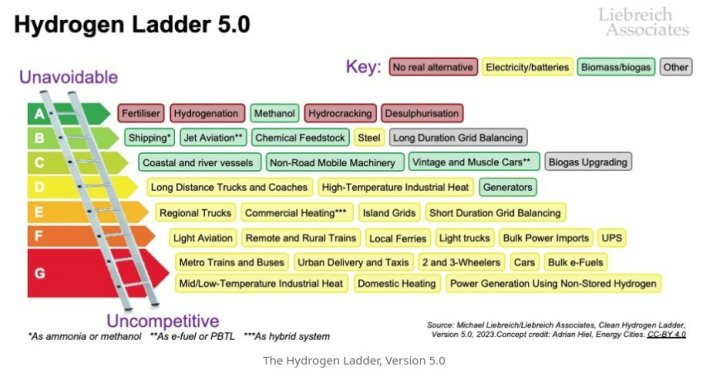
Present Hydrogen production contributes to 2.5 percent of global emissions. We need to transition these top level uses first, and then look to decarbonising road freight, rail, shipping and aviation.
We will need to prioritise renewable hydrogen production use, which requires ramping up renewable energy beyond what we need for our electricity grid. Michael Liebreich Hydrogen Ladder provides a use case prioritization guide.
Active and Public Transport
We had general agreement for the section on active and public transport.
We welcomed the establishment of the Active Transport Fund and National Urban Policy unit which will contribute to a national policy framework for active and public transport, although critical of the level of funding when compared to France.
We noted the recent research on Prioritising Active Transport published by Ausroads.
We had a small section on Comfort for active transport users can encourage mode shift, supported a national e-bike subsidy program.
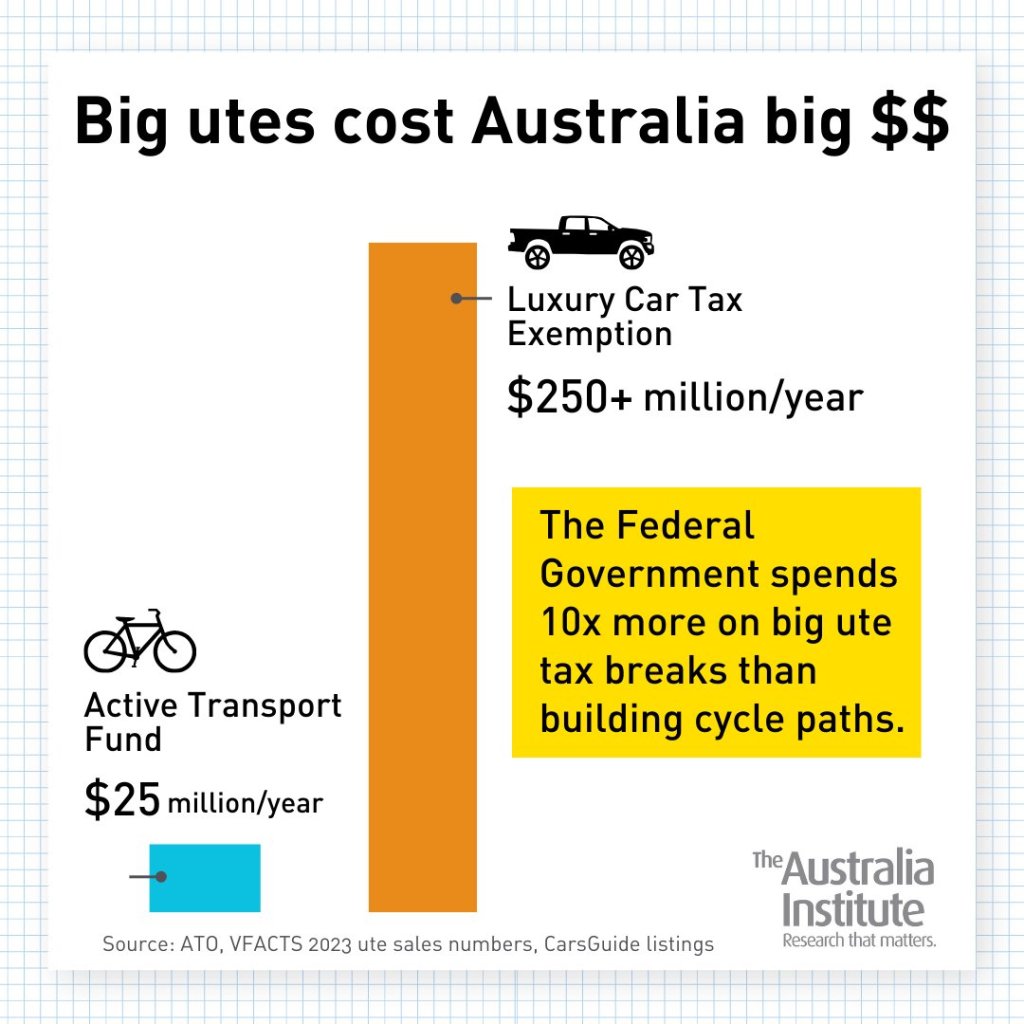
We also highlighted a major tax loophole for oversized utes that increase emissions and increase risk for other road users including pedestrians and cyclists identified by the Australia Institute.
Freight and Supply Chain
For freight and supply chain strategy we emphasised the need to move more freight from road to rail, and also supported urban environment last kilometre delivery incorporating micro mobility freight options.
Under the New Vehicle Efficiency Standard and National Electric Vehicle Strategy we supported initial policies for new vehicles, but again raised lack of suppiort for e-bikes. We also introduced a section arguing the need to Regulate advertising based on product carbon intensity. This may include carbon intensity labelling, or Fossil ad bans for high carbon products such as petrol/diesel vehicles, or for aviation.
The proposed pathway for heavy road vehicles we think largely lies in battery electric, although niche or transitional role for hydrogen and low carbon fuels.
Net Zero path for Rail
For the net zero path for rail we emphasised the importance of electrification. Battery Electric will also play a role in regional and freight services. Hydrogen fuel cell may play a niche role for freight. Low Carbon liquid fuels should be restricted to aviation but may play a transitional role.
Net zero pathway for Maritime
For the Net zero pathway for Maritime we stressed port electrification, slow steaming, route optimisation, wind assist technologies and alternative fuels such as ammonia.
We were also critical of the failure for Australia to adopt more ambitious stances at the International Maritime Organisation (IMO) to support Pacific nations ambitious plans to decarbonise shipping.
Net Zero path for Aviation
Our major issue was with aviation. Never stated upfront, but the document supports aviation growth despite expert scientific advice that we need to limit present aviation demand to manage aviation emissions. Market based and regulatory policies for demand management are not even considered, other than some voluntary modal shift. This is grossly irresponsible and likely means aviation will not achieve net zero by 2050 based on the measures put forward.
Gössling, S., & Lyle, C. (2021) in Transition policies for climatically sustainable aviation. identifies the range and effectiveness of policies to make aviation sustainable. Just about all the Transport Demand change policies are ignored in the consultation document.
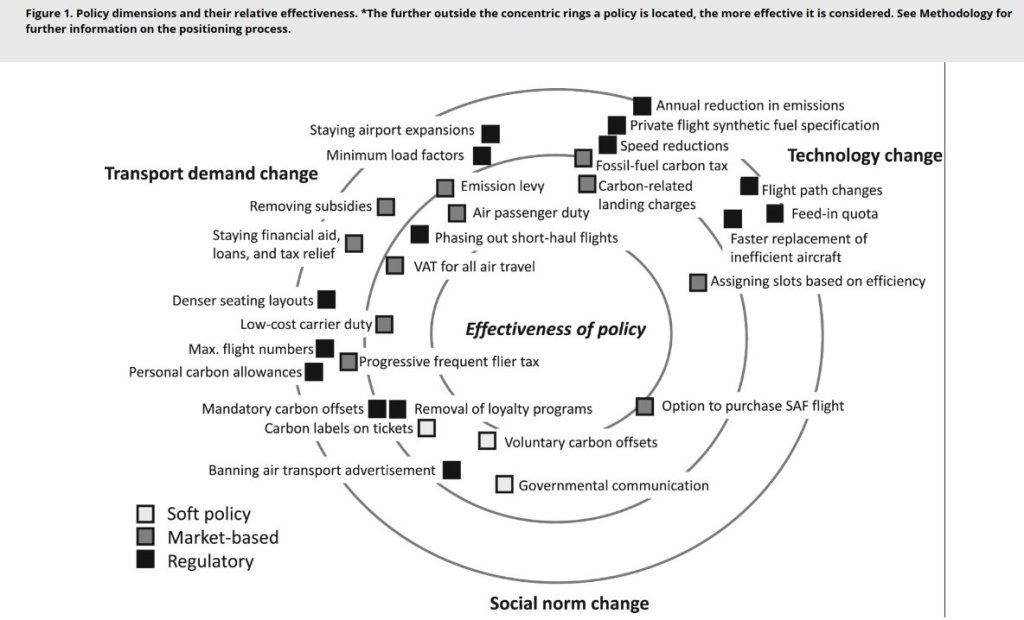
We argued our case based on the evidence base from scientific experts of the need for demand management, the 5th tenet of the Avouid-Shift-Improve framework set out at the begginning of the consultation document.
We also looked at aviation electrification and its use for limited capacity short regional flights.
Sustainable Aviation Fuels is more complex, but also doesn’t do the job in getting to net zero, but is part of the solution. Recent research published in April 2024 by Watson et al – Sustainable aviation fuel technologies, costs, emissions, policies, and markets: A critical review – highlights:
- A large gap between current SAF demand and net-zero by 2050 projections.
- SAF costs are 120%–700% higher than fossil-based jet fuel costs.
- SAF reduces CO2 emissions between 27% and 87%.
- The lack of producer incentives poses a significant hurdle to SAF adoption.
We also highlighted research showing a trade-off between Fuel efficiency and reduced carbon dioxide emissions at the expense of NOx emissions. So if we are just measuring CO2 emissions, which ICAO CORSIA scheme does, everything is rosy, but ignores the climate impact of NOx gases that increased.
Net zero pathway for transport infrastructure
For Net zero pathway for transport infrastructure, we said planning was important in facilitating other transport modes, and provided two local examples where this was ignored. We also highlighted that contracts should be incorporating use of green cement/concrete to reduce these production costs. We also highlighted there needs to be incorporated wider sustainability criteria such as vegetation that helps ameliorate the urban heat island effect which can indirectly affect emissions. We identified that Unshaded car parks indirectly cause greater vehicle emissions,
Collaboration with Industry, business, governments, communities
On Collaboration with Industry, business, governments, communities we argued that the Australian Government needs to work collaboratively with industry and business, it needs to be aware of corporate bias and agenda setting that can undermine societal goals and outcomes. This is most clearly evident in the aviation sector. We do not see anyone on the Australian Jet Zero Council likely to be questioning the aviation growth business model.
There has been a lack of coordinated approach at the national level across states and local government.
We also included our own statement based on our sense of place in Melbourne’s northern suburbs as Appendix 1: Transport Policy in Merri-bek for the Climate Emergency (2023 refresh)
This submission is in addition to an intial survey of the National Transport and Infrastructure Roadmap made in December 2023: Submission on Federal Government Transport and Infrastructure Net Zero Roadmap and Action Plan.
See our full submission below:
 Climate Action Merribek
[…] Note 3 Transport Emissions: One of the issues in transport has been the motor vehicle companies promoting SUVs and luxury monster utes which increase vehicle emissions and reduce road safety and add to a growing road death toll. The New Vehicle Efficiency Scheme may assist in partly reversing this, but the Government needs to also consider closing the Luxury Ute tax loophole that costs the taxpayer $250 million in 2023. A Fossil Ad Ban would also be useful in changing demand for these vehicles. We highlighted both of these actions in our Net Zero Transport Consultation Roadmap submission […]
LikeLike