Highlight
Essential Heatwave Preparedness Tips for Merribek Households. Stay cool, look after your heat Health. Remember Fossil Fuels are worsening Extreme Heat. (CAMerribek)
Timeline
28 February 2025 – Nuclear reactors could become targets of war, defence experts warn (SBS News) A telling reminder given the Chinese flotilla passing our shores. Decentralised renewables are safer from a security point of view.
28 February 2025 – Trump’s war on climate science is pushing us into a dystopian future (The Conversation) Worth reading for its implications for global climate action and for science in Australia.
27 February 2025 – The heat-safe play index (H-SPI): A tool to compare relative thermal safety of outdoor playgrounds. This science study looks at how we can improve thermal comfort in playgrounds through systemisation and using a Heat-safe Play Index tool to assess playgrounds to prioritise playground upgrades and their features. (Science Direct)
27 February 2025 – Intense heat changes our biology and can make us age significantly faster: study (The Conversation)
27 February 2025 – Seasonal Bushfire Outlook Autumn 2025. (AFAC) WA, SA and Victoria have heightened fire risk.
27 February 2025 – Cutting the public service saves nothing (Australia Institute) Reducing the size of Australia’s public service is often characterised as a way to save the country money and make government departments more efficient. New research by The Australia Institute’s Centre for Future Work has found that sacking public servants actually costs the country money and makes providing services less efficient.
Key findings of Briefing Paper (Click to Open)
The new briefing paper – Restoring Public Sector Capability Through Investment In Public Service Employees – debunks several of the myths promoted in the political debate around the size of Australia’s public service. One such myth is that Australia’s public service is “bloated” or “inefficient”.
The research found that, despite claims to the contrary, most of the public service jobs created since 2022 were not based in Canberra. It also found:
- Public servants make up 0.68% of the population, comparatively low by historical levels (0.75% in 2008)
- The last time public service jobs were cut, they were largely replaced by consultants, contractors and labour hire workers. The process was not only expensive, it led to high-profile integrity failures and loss of public trust
- Cutting public sector jobs means longer waiting times and problems getting essential support
- Most APS employees are women (around 60%) and there’s a growing number of public servants under the age of 30 (currently almost 16%)
- Around 36,000 public servants have been hired since the Albanese government lifted the cap on APS staffing levels in 2022, taking the overall workforce to 185,343. In 2016 there were 155,607 public servants. The $20.8 billion spent on consultants by the Morrison government in 2021-2022 equates to 53,911 additional public servants
- “Promising to reduce the size of the public service is a cheap political stunt,” said Lisa Heap, Senior Researcher at The Australia Institute’s Centre for Future Work.
27 February 2025 – Sea level Rise from Climate Change is a factor increasing shore erosion, like featured in this story: Phillip Island residents call for help as eroding shoreline threatens to flood homes (ABC News)
26 February 2025 – New report skewers Coalition’s contentious nuclear plan – and reignites Australia’s energy debate (The Conversation | Interim Report) 858 submissions, 94 short statements (less than 250 words) Majority report, with a minority report by the 3 Liberal members, plus additional comment by Dr Monique Ryan (It is worth reading).
24 February 2025 – Peter Dutton’s Nuclear path would blow out Australia’s emissions targets, new modelling shows (ABC News) Coalition nuclear plan hides a 2bn tonne ‘carbon bomb’ that puts net zero by 2050 out of reach, new analysis shows (Guardian) Here is what the Climate Change Authority analysis says: Assessing the impact of a nuclear pathway on Australia’s emissions
Key Details (Click to open)
Compared with the current national pathway which is set to see coal-fired generators fully replaced by a mix of renewables and firming by 2040, the analysis finds the alternative pathway would mean:
- missing Australia’s legislated 43% national emissions reduction target for 2030 by more than five percentage points, and still not achieving this level of reduction by 2035.
- an additional 1 billion tonnes of emissions from the electricity sector, and likely at least that amount again economy-wide by 2050
- pursuing a pace of climate action that is consistent with a global pathway to around 2.6°C of warming, a level at which scientists, economists and governments anticipate major social, economic and environmental harm
24 February 2025 – A powerful force is stopping the Indian Ocean from cooling itself – spelling more danger for Ningaloo (The Conversation) “Climate change is making marine heatwaves more intense and frequent. It means reefs often don’t have time to recover between destructive bleaching events.All this is compounded by the general trend towards warmer oceans as the planet heats up. Drastic action on climate change is needed now. If this alarming pattern continues, the world’s reefs risk being lost entirely.” Read Author Tim Winton on the WA marine heatwave and Ningaloo (Guardian)
23 February 2025 – Extreme heat more frequent in Sydney than reported, new research suggest (ABC News) Although data is focussed on Sydney the blindspot on urban heat also probably applies to other cities, including Melbourne’s northern and western suburbs.
Total fire ban in place as Tasmanian bushfires enter third week (ABC News)
21 February 2025 – The promise of green iron, steel and ammonia is keeping the green hydrogen dream alive (The Conversation) Fertiliser production and Green iron are both high priority areas for hydrogen use according to Michael Liebreich’s Hydrogen Ladder looking at use case efficiency.
21 February 2025 – Fossil fueled insurance premiums: What climate change means for your premiums and property value. (Youtube) An Australia Institute Politics in the Pub discussion with Mark Ogge, Principal Adviser, The Australia Institute, Kate Chaney MP – Independent Member for Curtin, and Karl Mallon – Chief Executive Officer, Climate Valuation. The intersection of insurance, property values, cost of living and climate change. https://www.youtube.com/watch?v=ic98_Kmo8cI
21 February 2025 – Green light for second hockey club pitch in Merri-bek (Brunswick Voice) Climate Action Merribek mentioned regarding most synthetic turf contains PFAS forever chemicals and also highlighting the need for microplastics pollution mitigation measures. There are 3 manufacturers that now produce ‘PFAS free’ synthetic turf. Using this surface is risk limitation, but does not negate all the issues of synthetic turf. Hockey is one of the few sports that is only played competitively on an environmentally unsustainable surface.
20 February 2025 – Melting land glaciers caused almost 2cm of sea level rise this century, study reveals. And Glacier loss is accelerating. This has implications for freshwater for drinking, agriculture and hydropower in South America, South Asia and Europe. This is separate from Ice Sheet loss from Greenland and Antarctica. (Guardian | Nature)
20 February – Climate change and Australian security: a conversation with Admiral Chris Barrie. (Youtube) A Town Hall conversation with Independent MP Monique Ryan, Climate analyst David Spratt and Admiral Chris Barrie. This is an important discussion that has been absent from parliament during the last 3 years. https://www.youtube.com/watch?v=9iVSIVP23mM
19 February 2025 – Santos CEO Kevin Gallagher makes a pitch for Federal approval of Narrabri Gas Project whoever wins Federal election (The Age) What is not detailed in this report is that Santos donated to political parties $148,950 in 2023-2024, with $71550 to ALP entities, $77400 to Coalition Party entities. (Santos AEC donor return) We won’t know how much they donated in an election year for several months. They don’t donate for nothing, but expect a return on this investment, and deride the local farming and indigenous communities opposing Narrabri Gas fracking.
19 February 2025 – Red alert moment for Ningaloo. WA environment minister calls for urgent briefing on Ningaloo Reef coral bleaching event (ABC News) No mention of oceans warming driven by climate change and fossil fuel burning, including Gas expansion off the north West Shelf.
19 February 2025 – Farmers on Western Australia’s south coast are challenging the norm by selling blueberries in compostable cardboard punnets instead of plastic. (ABC News) Boomerang November 2024 report found that supermarkets were still placing too much emphasis on the recycling of packaging, not removal of plastic.
19 February 2025 – Food security and food resilience. In North Queensland after the floods Small shops that source locally have good supplies while supermarkets that rely on complicated transport logistics are bare. Bare shelves in supermarkets after Queensland floods spark calls for supply route solutions (ABC News)
18 February 2025 – Has your morning coffee got more expensive? Climate change could be to blame (Euronews) The increasing impact of extreme weather on producers has caused coffee prices to skyrocket, doubling in the last year. “If nothing is done, we should forget about coffee in a few years to come.” says Mackson Ng’ambi, CEO of Mzuzu Coffee Cooperative in Malawi.
18 February 2025 – Western Sydney high school students to learn about extreme heat effects (ABC News) We definitely need a similar program for Melbourne’s northern and western suburbs.
17 February 2025 – The Australia Institute launches a new report: Cost-of-Living and the Climate Crisis. How climate change inaction drove up the cost-of-living. This report mirrors our own post with some more in depth details.
Key Findings (Click to Open)
Key findings:
- Insurance premiums have soared due to an increase in natural disasters, with some households now spending over seven weeks of gross income just to cover home insurance
- Food prices have risen by 20% since 2020, with climate-related disruptions wiping out harvests and making it harder for some regions to grow food
- Energy costs remain high due to a reliance on fossil fuels, underinvestment in renewables, and fossil fuel exports forcing Australians to compete with the global market for Australia’s resources
- The impacts of the climate crisis are disproportionately affecting lower-income and regional households, who are already feeling the financial strain more severely
The report underscores the need for urgent climate action to protect Australian households from these escalating costs. Addressing the root causes of climate change is essential to lowering future risks and alleviating the economic strain that millions of Australians are facing.
17 February 2025 – Hailstorms are shifting south with changing climate (ABC News) Also, Eastern blue gropers are in decline in NSW and heading south with climate change: study (ABC News)
16 February 2025 – ‘People are paying too much’: Coalition could break up big insurance companies, Dutton says (Guardian) This will not resolve the issue of increasing insurance premiums driven by increase in climate damages. In fact the Coalition policies with nuclear power, coal and gas, and slowing renewables transition exacerbate climate change damages more than Labor. See our climate change and Cost of Living Blog
15 February 2025 – Townsville smashes all time rain record for any month. “With 13.2mm recorded yesterday, the current accumulated February total at #Townsville AP is now at an incredible 1150.4mm! Not only does this easily break 2019’s Feb record of 964mm, it’s officially the wettest month of all-time surpassing 1147.3mm in Jan 1953! Data since 1941.” (Cameron H on Bluesky) And the month is only half over!
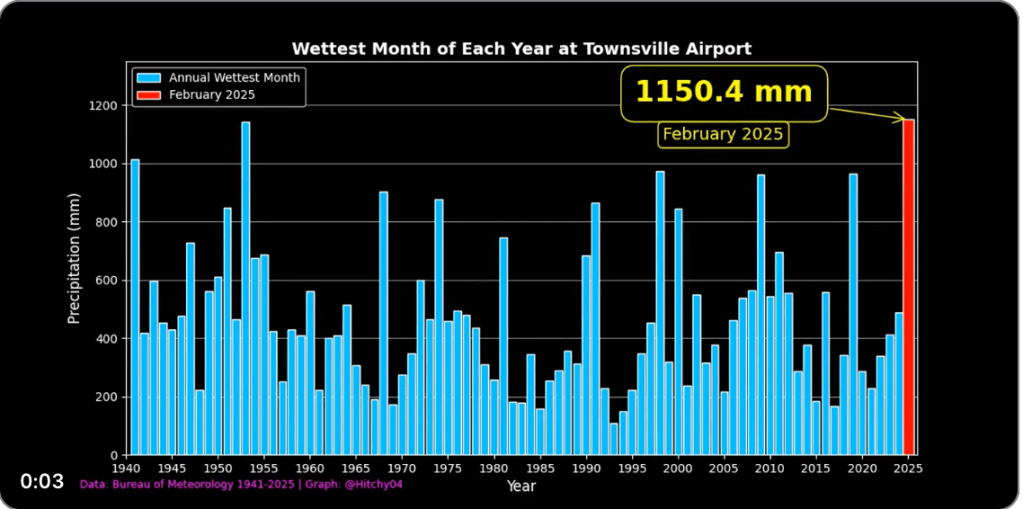
14 February 2025 – Price hikes and shortages flagged after banana crops ‘cop a flogging’ in north Queensland floods. Fruit prices expected to rise in short term while cost of sugar should remain stable despite damage to cane fields (Guardian) This is a good example exemplifying how extreme weather drives food price increases as highlighted in our recent blog post on climate driving Cost of Living. Oh, and Townsville has just set a new record February rainfall total, just halfway through the month.
13 February 2025 – Extreme weather around Australia. Bushfires threatening communities on Tasmania’s west coast (ABC News) Heatwave and total fire ban declared in already burnt parts of Victoria (ABC News) Port Hedland braces for category five Tropical Cyclone Zelia (ABC News)
13 February 2025 – Renewable energy investment reached new highs in 2024 🚀 with a massive $9 billion invested in renewable energy projects across the year, along with 10,000 new jobs. (Clean Energy Council)
Details and Highlights (Click to Open)
Latest Clean Energy Council Quarterly Investment Report, reveals that Australia had its best year for large-scale renewable energy investment since 2018 with 4,346 MW of new generation capacity.
Highlights for the quarter include:
✅ 1,405 MW or $3.3 billion of investment, surpassing all of 2023’s projects combined
✅ 1,598 MW of new generation committed across 7 projects, in line with the pace required to transition Australia’s grid – a vital goal as we face the retirement of ageing and increasingly unreliable coal- fired power stations.
✅ a total of 870 MW / 1,936 MWh of new energy storage committed.
✅ onshore wind is making a strong comeback with 1,758 MW of financially committed projects in 2024. This resurgence is a promising sign of what is to come as we work towards our 2030 targets.
13 February 2025 – Crossbench sidelined as Labor strikes deal with Coalition on political donations and spending caps (Guardian) Major Australian charities slam undemocratic changes to election rules (Stronger Charities) Major Australian charities have slammed the Labor and Liberal deal to pass undemocratic electoral changes. The rushed process has led to critical drafting errors that will severely limit the ability of charities to advocate during election periods. While much of the public attention has focused on donation and spending caps during elections and how that would affect different types of candidates, an often overlooked aspect is how it will impact other types of groups like charities and not-for-profits.
More details (Click to open)
The positive transparency elements of the bill have been significantly watered down. The donation disclosure threshold which was meant to be $1000 is instead $5000. The threshold is the single most useful lever in shining a light on hidden donations. Due to the way party branches are treated as separate entities, under the changes people will be able to donate up to $135k across an electoral cycle to the 9 Labor parties and never disclose a single cent.
Spending limits for political campaigns were set at $800,000 an electorate, and $90m nationally. But major parties can draw upon general Party political advertising to supplement electorate advertising, a facility that Independent candidates will not have.
11 February 2025 – Paris Agreement: Official deadline passes for countries to submit their revised Nationally Determined Contributions (NDCs) under the Paris Agreement. Only 13 of the 195 parties have done so. Alarmingly, this group includes just five developed countries, which are required to lead the way on climate action. (CAN International) Australia has delayed its submission.
11 February 2025 – How Climate Change Drives Up Australia’s Cost of Living. An examination of climate change and energy costs, food prices and insurance as factors in increasing Cost of Living (Climate Action Merribek)
8 February 2025 – Dollars in the dust: Is outback scrub really saving the planet? An article on carbon offsets using the human-induced regeneration methodology. Big questions remain about the efficacy of these carbon credits. (the Age) Follow up article: ‘Parasites’, ‘cowboys’: The carbon companies dividing rural Australia. (The Age) So what is Labor’s Safeguard Mechanism dependant on? Australian Carbon Credit Units. Companies are allowed to buy unlimited ACCUs if they fail to meet emissions reduction targets.
7 February 2025 – One hundred ‘carbon-neutral’ corporates quit government carbon offsets scheme over integrity concerns. (the Age) The good news is that many of these corporations have moved to focus on the decarbonisation of their own operations. There is a role for high integrity carbon offsets for hard to abate emissions. See also this study: Ineffective carbon offset, (7 February 2025) which concludes “it is highly likely that at least 52% of the wind farms supported by the Clean Development Mechanism (CDM) would have been built anyway, which means the programme approved more than 28 million tonnes of CO2 emissions. If the same rate of misallocation applies to all CDM projects across the world, it could lead to 6.1 billion more tonnes of CO2. (Nature Climate Change) Many councils and businesses used the CDM offsets to achieve ‘carbon neutrality’.
6 February 2025 – The Juice Media dissects Liberal Nuclear Plan…
6 February 2025 – How extreme heat is disrupting school and the summer holidays for Aussie families. (Women’s Agenda) Recent research has showed 85 per cent of parents are worried about their children’s health and safety in extreme heat, while 70 per cent said they kept their child inside more often in the summer holidays. Extreme heat, fuelled by the worsening climate crisis, is reshaping children’s lives in Australia (ACF)
6 February 2025 – It’s official: Australia’s ocean surface was the hottest on record in 2024. (The Conversation)
5 February 2025 – 95 top Australian and international artists unite to stop the destruction of one the world’s greatest artworks on the Burrup Peninsula, already corroding from emissions from LNG processing nearby, and with the Federal Government set to approve the Browse Project of emissions for 50 years. (Australia Institute)
5 February 2025 – Climate change target of 2C is ‘dead’, says renowned climate scientist James Hansen. (Guardian) It is a warning to us all that our politicians have failed to act, or when they do act, have not been nearly ambituous enough. Extreme weather events will worsen imposing real costs on real people and driving up insurance for us all. Study: Global Warming Has Accelerated: Are the United Nations and the Public Well-Informed? (Environment: Science and Policy for Sustainable Development)
4 February 2025 – February 2025 floods in Queensland mostly exacerbated by human-driven climate change (Climameter) Both the Prime Minister Albanese and Opposition Leader Dutton made statements in parliament on 5 February on the Floods but climate change and fossil fuels not mentioned once.
4 February 2025 – Energy experts refute Dutton’s claims on Nuclear cuting electricity costs. ‘No idea what he’s talking about’: Dutton’s nuclear plan could raise – not cut – electricity bills, experts warn (Guardian)
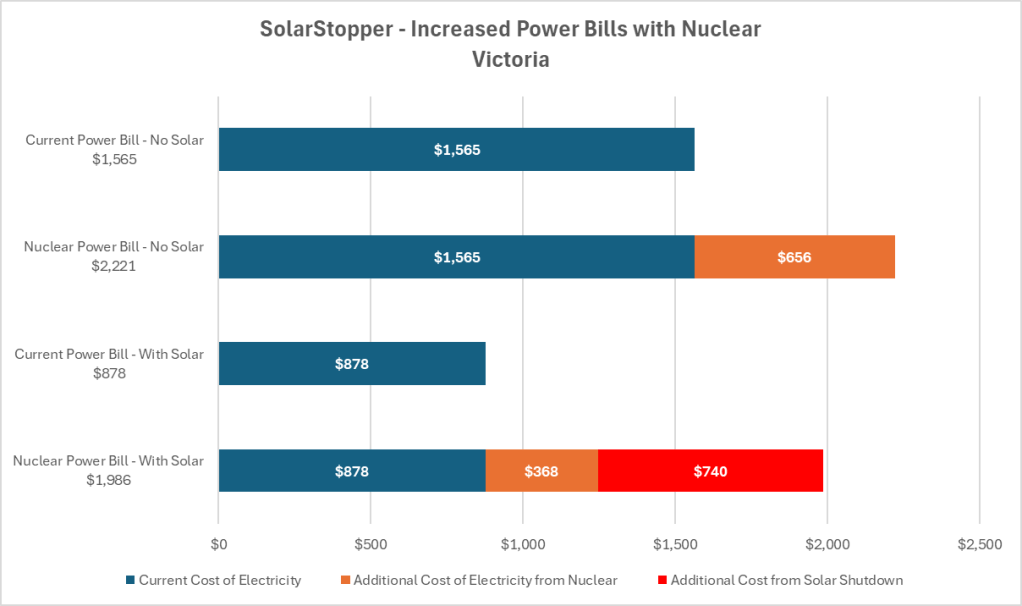
3 February 2025 – Ten million Australians will see their power bills more than double under Peter Dutton’s nuclear policy, according to detailed analysis from the Smart Energy Council. For the 4 million solar homes across the nation, power bills will go up more than $1,100 a year. For non-solar homes, power bills will go up by an average $665 a year – a 30% increase. (Smart Energy Council)
3 February 2025 – Labor’s dumping of Australia’s new nature laws means the environment is shaping as a key 2025 election issue (The Conversation). This is abrogation of an election commitment by Labor in 2022 to update the Environment Protection and Biodiversity Conservation (EPBC) Act. A reason to vote Teal Independant, or Greens, and preference Labor ahead of the LNP in 2025.
2 February 2025 – Severe heatwave over Melbourne (Weatherzone) Scorching days ahead: thunderstorm threatens but no heatwave relief (The Age) Essential Heatwave Preparedness Tips for Merribek Households. Stay cool, look after your heat Health. Remember Fossil Fuels are worsening Extreme Heat. (CAMerribek) See also our blog on Understanding the Urban Heat Island Effect in Merribek and Melbourne. (CAMerribek) Bushfires in western Victoria and Little Desert spark evacuations (ABC)
2 February 2025 – North Queensland floods spark mass evacuations and blackouts, more rain forecast. Premier Crisafulli has called it a once in a 100 years event. Yet no-one is mentioning the C word: climate change. Present global warming with warmer oceans means the atmosphere can carry 11-12% more moisture that exacerbates heavy rainfall adding to flood events. (ABC)
What’s driving north Queensland’s deadly, record-breaking floods? (click to open)
“More extreme rainfall and higher frequencies of flooded rivers and flash floods around the world have a clear link to climate change and ongoing global heating.
“The main drivers behind these events include warming of the atmosphere. For every 1°C of warming, the atmosphere holds 7% more water vapour. Recent research suggests this figure could be even higher for short duration rainfall.
“Hotter oceans hold more energy, meaning they can also amplify the global water cycle when atmospheric conditions are suitable.”
– Steve Turton, Adjunct Professor of Environmental Geography, CQUniversity Australia, (The Conversation)
2 February 2025 – Labor shelves contentious ‘nature positive’ laws after West Australian backlash. Looks like Labor’s promise to reform Australia’s environment laws in this term has failed. They failed to go hard, early to get the runs on the board, which was vitally needed. So an independent EPA and Data Authority now off the cards. (ABC) Labor’s own environment action network (LEAN) laments delay of EPA legislation, stating ‘terrible loss’ would allow illegal logging to continue. (Guardian)
1 February 2025 – Dutton’s nuclear plan requires ‘huge’ new bureaucracy. The opposition’s plans to cut the public service are at odds with the scale of bureaucracy and consultants needed to support its nuclear power proposal, the minister for the public service Katy Gallagher says (Saturday Paper)
1 February 2025 – Leaders in the Pacific raise alarm over ‘direct impact’ of Trump’s climate retreat and aid freeze (Guardian)
1 February 2025 – ‘Perfect rat storm’: urban rodent numbers soar as the climate heats, study finds. Sharp rise in population in 11 of 16 cities expected to continue as rising temperatures make it easier for the animals to breed, say researchers. (Guardian)
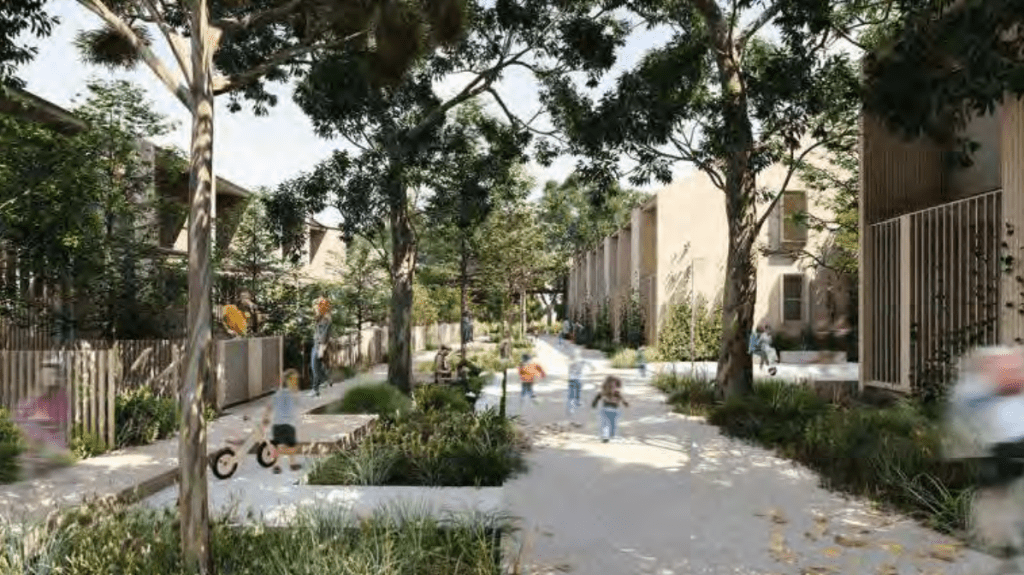
31 January 2025 – Car-free housing development approved in Coburg North. This is the Nightingale Housing 72 Townhouse development on Sheppard street, opposite Hosken East Reserve, 500m from Merlynston station and near the Upfield Bike Path. It will offer 9 units for social housing, 5 parking spots for a commercial car-share parking. This development is clearly not for everyone but recognises need for reduced car dependency in housing options. (Brunswick Voice)
 Climate Action Merribek